
Introduction
In the heart of the Vilcabamba mountain range, northwest of the city of Cusco, rises one of the most imposing and revered peaks in the Peruvian Andes: Nevado Salkantay. Standing at 6,271 meters above sea level, this majestic summit not only dominates the landscape but also holds a privileged place in the history, spirituality, and worldview of the Inca people.
Long before thousands of travelers began traversing the famous Salkantay Trek en route to Machu Picchu, this mountain was already regarded as an Apu—a protective spirit capable of watching over communities, controlling the weather, and ensuring the fertility of the land.
Today, Nevado Salkantay remains one of the most significant symbols of the Andes. Its natural beauty, cultural value, and connection to Andean tradition make it one of Peru’s most fascinating destinations.
In this article, you will discover the history, spiritual significance, legends, and importance of this sacred mountain within the Inca Empire.
Where Is Nevado Salkantay Located?
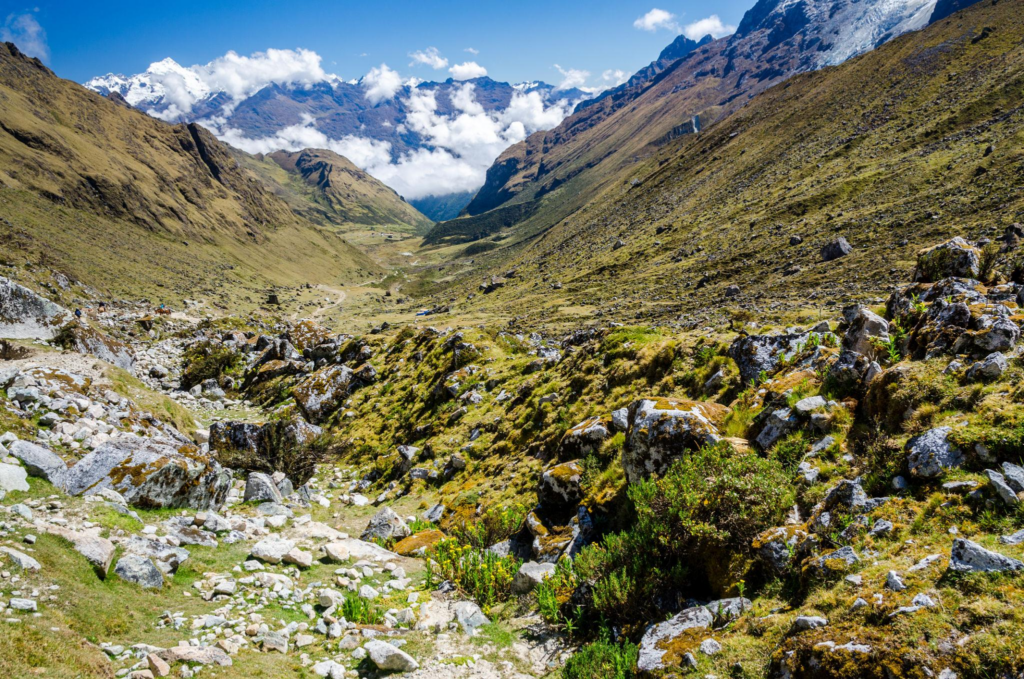
Mount Salkantay is part of the Vilcabamba Mountain Range, located in the Cusco region.
It lies approximately 60 kilometers (as the crow flies) from the city of Cusco and very close to the Machu Picchu Historic Sanctuary.
Its strategic location has made it—since ancient times—a landmark for Andean communities and a mountain of great importance within Inca territory.
Today, it marks the highest point of the famous Salkantay Trek, one of the world’s most renowned hiking routes.
What Does “Salkantay” Mean?
The name Salkantay comes from the Quechua language, and there are various interpretations regarding its meaning.
The most widely accepted translations are:
- Wild mountain.
- Indomitable mountain.
- Powerful mountain.
These meanings perfectly reflect the character of this massive mountain, whose presence commands respect due to both its size and the harsh weather conditions it presents for much of the year.
For the ancient inhabitants of the Andes, mountain names were not chosen at random; they described the mountain’s strength, personality, and spiritual energy.
Mount Salkantay as a Sacred Apu
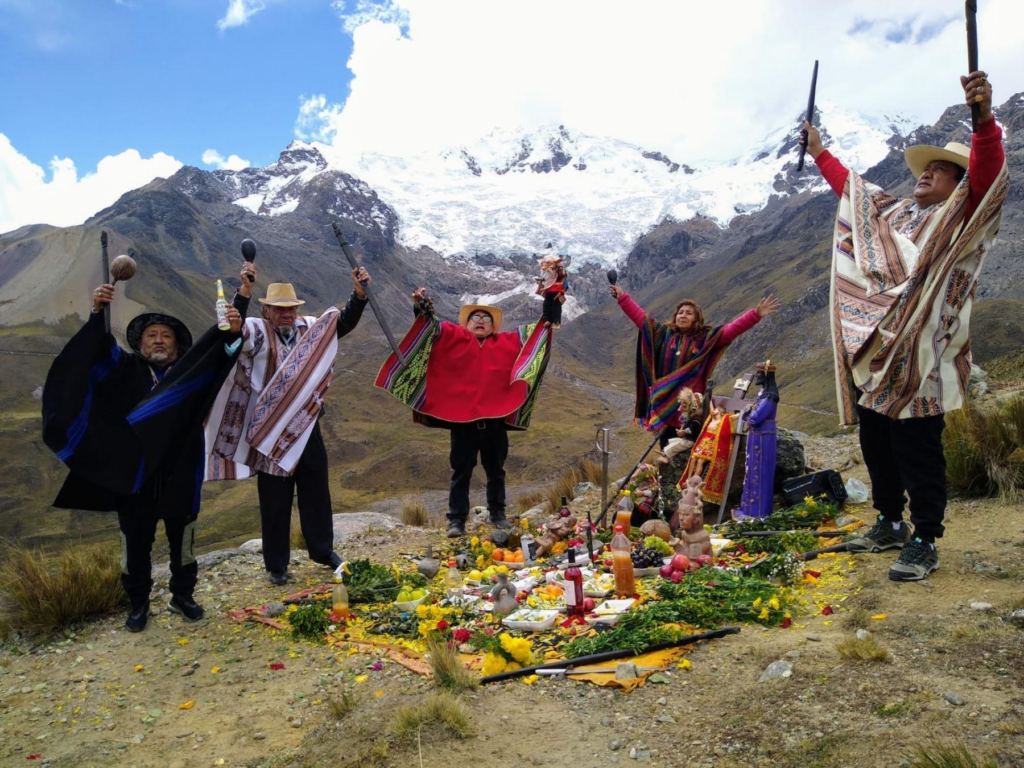
In the Andean worldview, mountains were much more than geographical features.
The Incas considered them Apus, protective spirits that watched over people, animals, crops, and water sources.
Snow-capped Salkantay was one of the most important Apus of the Inca Empire due to its enormous size and its influence over the surrounding valleys.
It was believed that Apu Salkantay could:
- Protect communities.
- Send rain for the crops.
- Feed the rivers through snowmelt.
- Watch over those who traveled its paths.
To this day, many Quechua communities continue to perform ceremonies and offer sacrifices in honor of this mountain, keeping alive traditions that have been passed down through generations.
The Relationship Between Mount Salkantay and Machu Picchu
One of the most interesting features of Mount Salkantay is its close relationship with Machu Picchu.
Although the two locations are separated by several kilometers, they are part of the same sacred landscape that the Incas held in high regard.
Various studies suggest that the site for Machu Picchu was chosen with the presence of sacred mountains in mind, such as:
- Salkantay.
- Huayna Picchu.
- Putucusi.
- Verónica (Wakay Willka).
From certain points within the Machu Picchu Historic Sanctuary, the imposing Mount Salkantay is visible, reinforcing the visual and symbolic connection between the two places.
For the Incas, these mountains protected the city and represented the union between the human and spiritual worlds.
The Role of Mount Salkantay in the Water System
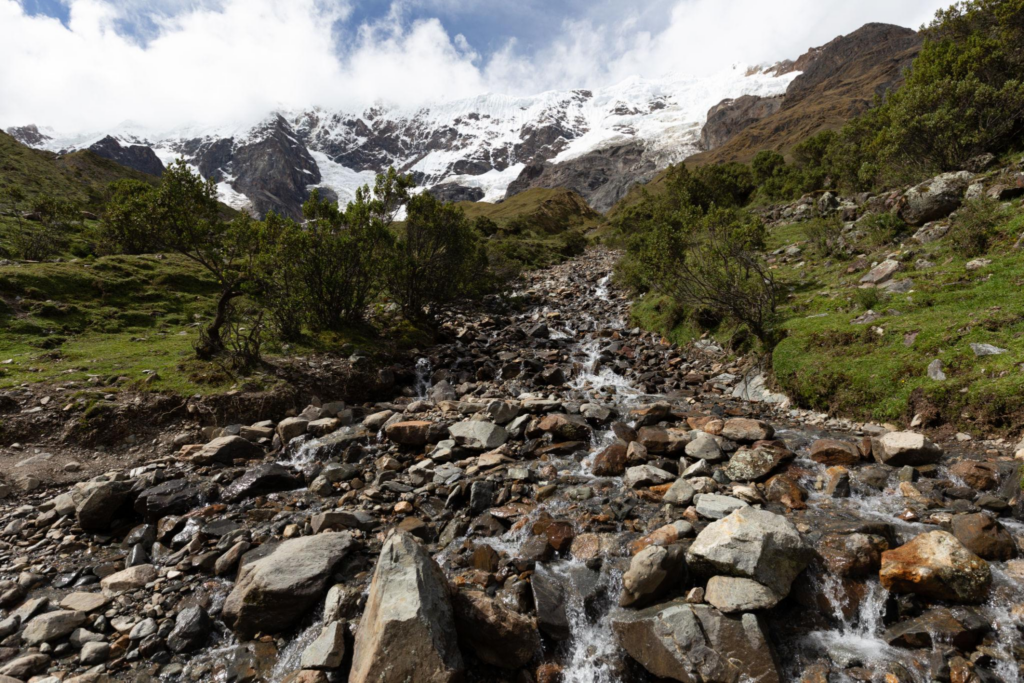
In addition to its spiritual significance, Mount Salkantay plays a fundamental role in the region’s ecological balance.
Its glaciers feed numerous rivers and streams that supply water to nearby communities, crops, and ecosystems.
Natural glacial melt gives rise to important watercourses that form part of the river basins of southern Peru.
For the Incas, water represented life and was deeply linked to the sacred mountains.
For this reason, Mount Salkantay was considered a great source of fertility and prosperity.
The Legends of Nevado Salkantay
Mountains have always inspired stories passed down from generation to generation.
One of the best-known legends holds that Apu Salkantay is a protector who watches over the balance between nature and people.
According to Andean oral tradition, when humans fail to respect Pachamama, the Apu may manifest his power through storms, snowfall, or changes in the weather.
Another belief suggests that the spirit of Salkantay maintains a symbolic relationship with other important regional Apus, forming a network of protective mountains that safeguard the ancient Inca territory.
Although these stories are part of oral tradition, they remain a fundamental element of the cultural identity of many communities.
Mount Salkantay and Climate Change

In recent decades, the glaciers of Nevado Salkantay have retreated due to rising temperatures.
This phenomenon is a source of concern for both scientists and local communities, as the melting ice affects water availability and the balance of high-Andean ecosystems.
Glacier conservation has become a critical challenge for preserving the region’s natural and cultural heritage.
Mount Salkantay and Peru’s Most Famous Trek
Currently, the snow-capped Salkantay Mountain is the star attraction of the Salkantay Trek, a hike that draws thousands of travelers each year.
The route offers views of unique landscapes:
- Snow-capped mountains.
- Glacial lagoons.
- Cloud forests.
- Tropical valleys.
- Crystal-clear rivers.
Beyond the adventure, many visitors find this journey an opportunity to learn about the history and traditions of Andean communities.
Interesting Facts About Nevado Salkantay
1. Standing at 6,271 meters, it is one of the highest mountains in the Cusco region.
2. Its name comes from Quechua and relates to the mountain’s strength and indomitable character.
3. It was considered one of the most important Apus (sacred mountain spirits) of the Inca Empire.
4. Its glaciers feed the rivers and lagoons that supply Andean communities.
5. It is part of the sacred landscape surrounding Machu Picchu.
6. The Salkantay Trek is one of the most famous hiking routes in the world.
7. Many communities continue to perform traditional ceremonies in honor of Apu Salkantay.
8. The retreat of its glaciers represents one of the region’s major environmental challenges.
Frequently Asked Questions About Nevado Salkantay
What does “Salkantay” mean?
It comes from the Quechua language and is often interpreted as “wild mountain,” “indomable mountain,” or “powerful mountain,” referring to its imposing nature and strength.
What is an Apu?
In the Andean worldview, an Apu is a sacred mountain considered a protector of people, crops, and nature.
How high is Nevado Salkantay?
Nevado Salkantay reaches approximately 6,271 meters above sea level, making it one of the highest peaks in the Cusco region.
What is its connection to Machu Picchu?
Nevado Salkantay is part of the sacred landscape surrounding Machu Picchu and was considered a protective Apu within the Inca worldview.
Can you visit Nevado Salkantay?
Yes. Every year, thousands of travelers hike the Salkantay Trek—one of Peru’s most popular hiking routes—which offers spectacular views of the snow-capped mountain and leads to Machu Picchu.
Conclusion
Nevado Salkantay is not only one of the highest and most spectacular mountains in the Peruvian Andes; It is a symbol of the profound relationship the Incas established with nature. Its importance as a sacred Apu, its role in water supply, and its commanding presence in the landscape made this mountain an essential element of the Inca Empire’s worldview.
Today, traversing the trails that cross its slopes offers the chance to discover far more than breathtaking scenery. It is an opportunity to understand the history, beliefs, and legacy of a civilization that knew how to live in harmony with the mountains.
Mount Salkantay continues to inspire travelers, researchers, and Andean communities alike, reminding us that the grandeur of the Andes lies not only in their height,