
Introduction
High in the Andes Mountains—surrounded by peaks, cloud forests, and a landscape that seems suspended between earth and sky—lies Phuyupatamarca, one of the most impressive yet lesser-known archaeological sites along the Inca Trail.
Its name comes from Quechua and means “City Above the Clouds”, a fitting description for this ancient Inca settlement, which remains shrouded in thick mist for much of the year.
Although many travelers pass through this site on their way to Machu Picchu, few are aware of Phuyupatamarca’s true historical, architectural, and spiritual significance. This complex was far more than a mere resting point; it served as a vital ceremonial, agricultural, and administrative hub within the Qhapaq Ñan, the vast road network of the Inca Empire.
In this blog post, you will discover the history, mysteries, and significance of Phuyupatamarca, an archaeological gem that continues to captivate those who journey along the Inca Trail.
Where Is Phuyupatamarca Located?
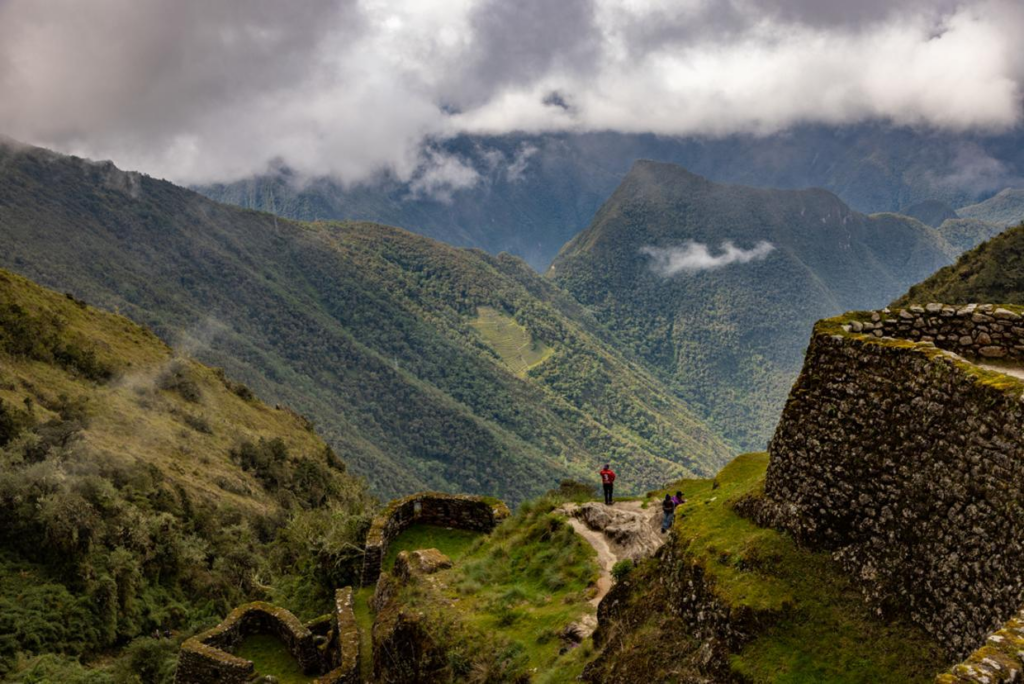
Phuyupatamarca is located within the Machu Picchu Historic Sanctuary, at approximately 3,650 meters above sea level, along one of the most spectacular sections of the Inca Trail.
The site lies between the archaeological complexes of Sayacmarca and Wiñay Wayna, forming part of the route leading to the citadel of Machu Picchu.
Thanks to its privileged location, it offers breathtaking views of:
- The Vilcabamba mountain range.
- Deep Andean valleys.
- Cloud forests.
- Mist-covered mountains.
On clear days, the scenery is simply spectacular.
What Does Phuyupatamarca Mean?
The name Phuyupatamarca comes from two Quechua words:
- Phuyu = Cloud.
- Pata = Elevated place or platform.
- Marka = Town or city.
Therefore, it is often translated as:
- The City Above the Clouds.
- The Town Among the Clouds.
The name perfectly reflects the natural setting where this complex was built, as clouds often envelop its structures for much of the day.
The History of Phuyupatamarca

Archaeologists believe that Phuyupatamarca was built during the reign of the Inca Pachacuti, the great ruler responsible for the expansion of the Inca Empire and the construction of major administrative and ceremonial centers.
Although there are no written records from the era, research suggests that this complex served several functions:
- A ceremonial center.
- A resting point for travelers.
- An administrative center.
- A control point for the Inca Trail.
- A space for agricultural activities.
Its strategic location allowed for the monitoring of a significant section of the ancient road connecting Cusco to Machu Picchu.
A Masterpiece of Inca Engineering
One of the most remarkable features of Phuyupatamarca is the quality of its architecture.
The Incas utilized the natural slope of the mountain to construct:
- Agricultural terraces.
- Ceremonial plazas.
- Dwellings.
- Stairways.
- Water channels.
The stones were carefully carved and fitted together without the use of mortar, employing the same construction techniques seen at Machu Picchu.
After more than five centuries, many of these structures remain in excellent condition.
The Hydraulic System of Phuyupatamarca

One of the site’s most fascinating features is its advanced hydraulic system.
Inca engineers constructed stone channels and fountains that distributed water throughout the complex.
This system made it possible to:
- Supply water to the inhabitants.
- Conduct religious ceremonies.
- Prevent soil erosion.
- Maintain the settlement’s water balance.
Many of these fountains remain functional thanks to the quality of their design.
The Agricultural Terraces

Agricultural terraces served purposes beyond just growing food.
They also helped to:
- Control erosion.
- Drain rainwater.
- Stabilize the mountainside.
- Make the most of the terrain.
This type of engineering was one of the Inca Empire’s great strengths, enabling agriculture to flourish even on extremely challenging terrain.
A Place of Great Spiritual Significance
For the Incas, mountains, water, and clouds held profound religious significance.
Phuyupatamarca was built in a setting considered sacred.
The constant presence of mist, water sources, and the proximity to important mountains made this an ideal location for ceremonies and rituals.
Many researchers believe that offerings related to water, fertility, and Pachamama were made here.
The Flora and Fauna Surrounding Phuyupatamarca

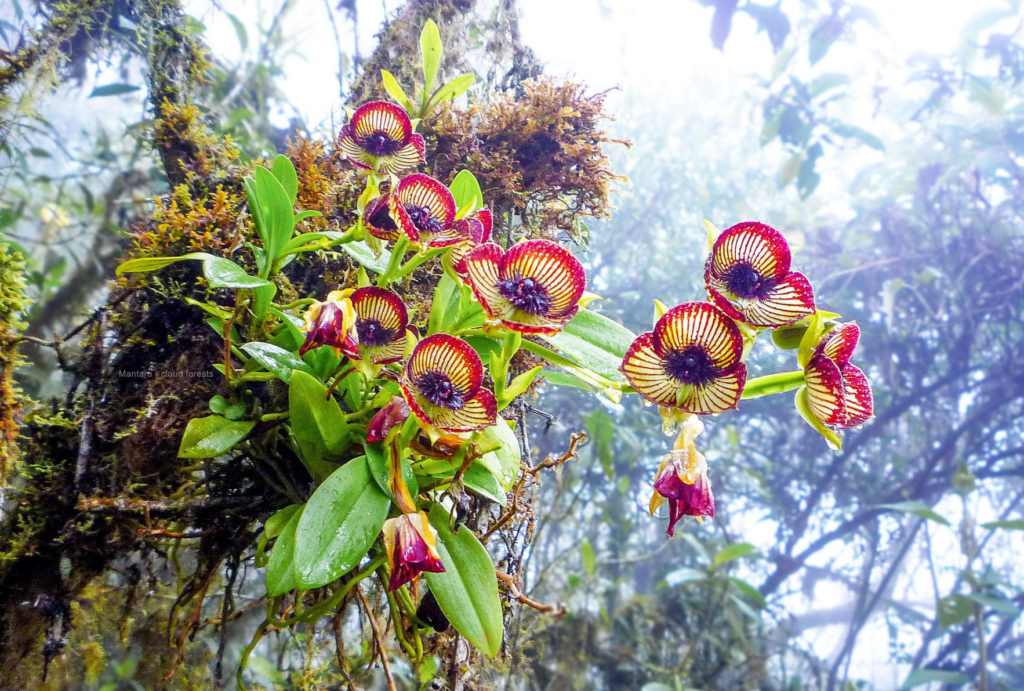
Thanks to its location in the cloud forest, Phuyupatamarca is surrounded by extraordinary biodiversity.
Notable species include:
Flora
- Orchids.
- Giant ferns.
- Bromeliads.
- Mosses.
- Lichen-covered trees.
Fauna
- Andean Cock-of-the-rock.
- Hummingbirds.
- Tanagers.
- Butterflies.
- Spectacled bear (very difficult to spot).
The combination of archaeology and nature makes this one of the most special places on the Inca Trail.
Phuyupatamarca and the Inca Trail
For those hiking the classic four-day Inca Trail, Phuyupatamarca represents one of the journey’s most memorable moments.
After crossing the mountain passes, the trail begins to descend into the cloud forest.
From this point, the path continues toward:
- Intipata.
- Wiñay Wayna.
- Inti Punku (Sun Gate).
- Machu Picchu.
For this reason, many travelers consider Phuyupatamarca to mark the beginning of the most scenic stretch of the entire route.
Interesting facts about Phuyupatamarca
1. Its name means “The City Above the Clouds.”
2. It is located at approximately 3,650 meters above sea level.
3. It is part of the Inca Trail to Machu Picchu.
4. It retains an advanced hydraulic system that still functions in some areas.
5. Its terraces aided both agriculture and water drainage.
6. It was built during the reign of the Inca Pachacuti.
7. It is surrounded by one of Peru’s most biodiverse cloud forests.
8. It is one of the best-preserved archaeological complexes on the Inca Trail.
Frequently Asked Questions
What does Phuyupatamarca mean?
It comes from Quechua and means “The City Above the Clouds” or “The Town Among the Clouds.”
Where is it located?
It is situated within the Machu Picchu Historic Sanctuary, along the Inca Trail, at approximately 3,650 meters above sea level.
What was its function?
It is believed to have been a ceremonial, administrative, and agricultural center, as well as a strategic point along the Inca Trail.
Can it be visited?
Yes. Access is reserved for those hiking the authorized Inca Trail to Machu Picchu.
Why is it so important?
Because it combines exceptional architecture, an advanced hydraulic system, and a unique natural setting that reflects the Incas’ close relationship with nature.
Conclusion
Phuyupatamarca is much more than just a stop on the Inca Trail. It stands as a testament to the extraordinary knowledge the Inca Empire achieved in architecture, engineering, and land-use planning.
Its privileged location amidst mountains and clouds, its agricultural terraces, water channels, and ceremonial significance make this site one of the most fascinating archaeological complexes within the Machu Picchu Historic Sanctuary.
For those who have the opportunity to hike the Inca Trail, reaching Phuyupatamarca means discovering a city that has remained shrouded in mist for centuries—and realizing that the true legacy of the Incas lies not only in Machu Picchu itself but also in each of the impressive archaeological sites that lead to it.