
Introduction
When the Inca Trail is mentioned, most people think of Machu Picchu, its breathtaking landscapes, and the ancient stone paths winding through the Andes. Yet, behind this extraordinary feat of engineering lay a complex infrastructure that enabled the operation of the Qhapaq Ñan—the most extensive road network in pre-Hispanic America.
A key element of this network was the tambo: a strategically located structure serving as a traveler’s shelter, supply depot, administrative hub, and communication station. Thanks to these structures, the Inca Empire was able to hold together a territory spanning over 30,000 kilometers of roads, traversing mountains, deserts, forests, and valleys.
Far from being mere lodgings, tambos were fundamental to the political, economic, and military organization of Tahuantinsuyo. In this blog post, you will discover their history and functions, how they were built, and why they remain a prime example of Inca engineering and planning.
What Were Tambos?
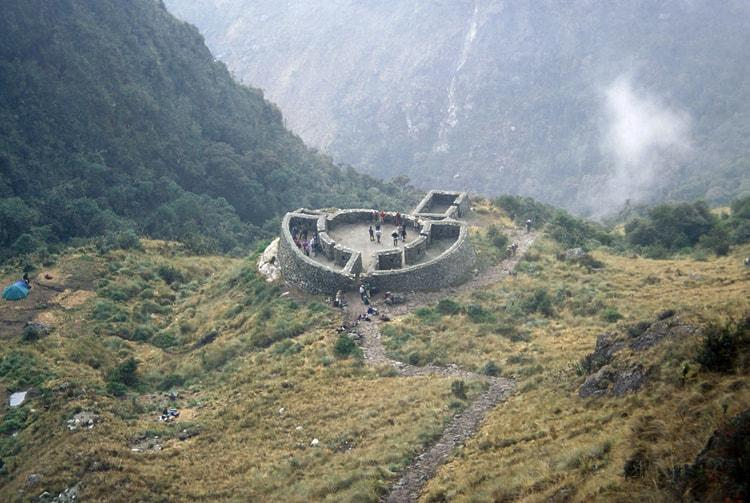
The word tambo comes from the Quechua tampu, meaning inn, shelter, or resting place.
Tambos were structures built by the Incas along the Qhapaq Ñan to provide lodging, food, and logistical support to those traveling the road network.
Depending on their size and location, they could serve various functions:
- Lodging for officials and travelers.
- Administrative centers.
- Storehouses for food and tools.
- Temporary military bases.
- Meeting and control points.
- Relay stations for chasquis (Inca messengers).
Tambos were under the supervision of the Inca State and were managed by individuals responsible for maintaining the facilities and organizing supplies.
The Qhapaq Ñan: The Great Road Network

To understand the importance of tambos, one must first know about the Qhapaq Ñan, considered one of the greatest achievements of pre-Columbian engineering.
This road network connected the territories of the Inca Empire, traversing what are now the countries of:
- Peru.
- Ecuador.
- Bolivia.
- Colombia.
- Chile.
- Argentina.
People, food, textiles, tools, information, and military troops moved along these roads.
Without support infrastructure like tambos, it would have been impossible to maintain communication and control over such a vast empire.
How Often Were Tambos Built?
The Incas carefully planned the location of each tambo.
Generally, they were built every 20 to 30 kilometers—a distance equivalent to an average day’s walk.
However, this spacing could vary depending on factors such as:
- Altitude.
- Terrain difficulty.
- The importance of the route.
- Water availability.
Larger, better-equipped tambos existed on main routes, while smaller facilities could be found on secondary roads.
Who Used the Tambos?

Although many people imagine that any traveler could stay at a tambo, these facilities were primarily intended for those engaged in activities related to the Inca State.
Among their main users were:
Chasquis
Messengers of the Inca Empire traveled great distances, carrying news, orders, and important objects via a relay system.
Imperial Officials
Inspectors and administrators used tambos during their travels to oversee the empire’s various regions.
The Inca Army
Troops found places to rest, resupply, and regroup at tambos during military campaigns.
Priests
They also served as lodging for religious authorities traveling between major ceremonial centers.
Nobles and Official Delegations
Visits by rulers and state representatives required suitable places to rest during long journeys.
What Were Tambos Like?
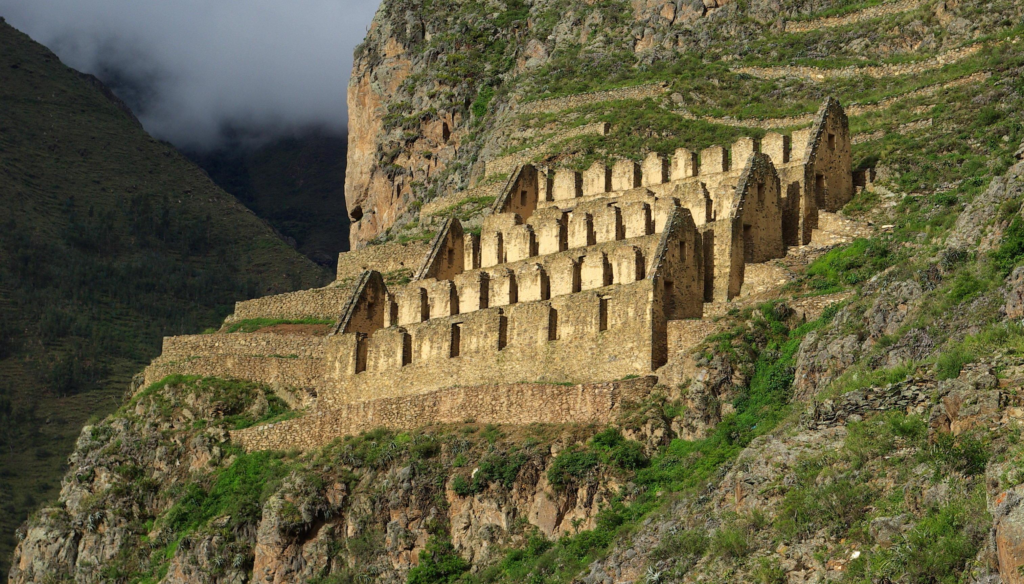
Although each tambo had its own unique characteristics, most shared a similar organizational structure.
Their facilities could include:
- Lodging quarters.
- Inner courtyards.
- Kitchens.
- Llama corrals.
- Food storehouses (qollqas).
- Administrative areas.
- Open spaces for gatherings.
The structures were built primarily of stone or adobe, depending on the materials available in each region.
Roofs were generally thatched with ichu, a hardy Andean grass traditionally used by the Incas.
Qollqas: The Empire’s Great Storehouses
One of the most important features of many tambos was the qollqa—a storehouse designed to preserve food for long periods.
They housed products such as:
- Dehydrated potatoes (chuño).
- Corn.
- Quinoa.
- Charqui (dried meat).
- Beans.
- Chili peppers.
- Coca leaves.
The excellent planning of these storehouses allowed for the rapid provisioning of travelers and armies, even in remote regions.
Chasquis and Tambos

The chasquis were the official messengers of the Inca Empire.
Their mission was to relay messages using an efficient system of runners.
Upon arriving at a tambo, they could:
- Rest.
- Eat.
- Switch runners.
- Deliver official messages.
- Receive new instructions.
Thanks to this system, news could travel hundreds of kilometers in a very short time.
Tambos and the Inca Trail to Machu Picchu
The Inca Trail, traversed today by thousands of tourists, also featured small tambos and support centers.
Certain archaeological sites—such as:
- Wiñay Wayna.
- Sayacmarca.
- Phuyupatamarca.
—served functions related to monitoring the trail, providing rest for travelers, and regional administration, in addition to their ceremonial uses.
These structures demonstrated the high level of organization within the Inca road network.
Tambo Engineering
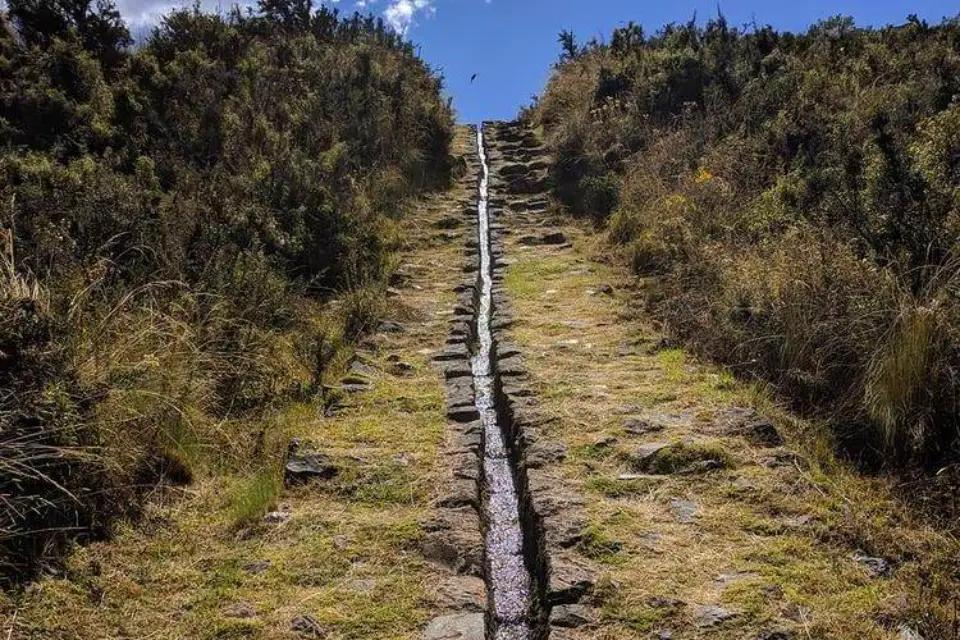
The Incas carefully selected the sites where they built tambos.
They sought locations that offered:
- Permanent access to water.
- Stable terrain.
- Protection against landslides.
- Proximity to the main road.
Many incorporated:
- Drainage systems.
- Retaining walls.
- Water channels.
- Terraces.
These solutions allowed numerous structures to survive for more than five hundred years.
Tambos Today

Today, several tambos retain parts of their original structures and can be visited along various sections of the Qhapaq Ñan.
In 2014, the Andean road network was declared a UNESCO World Heritage Site in recognition of its immense historical, cultural, and engineering value.
Tambos are part of this legacy and continue to be studied by archaeologists seeking to better understand the organization of the Inca Empire.
Interesting Facts About Inca Tambos
1. The word “tambo” comes from the Quechua tampu, meaning an inn or resting place.
2. They were built approximately every 20 to 30 kilometers along the Qhapaq Ñan.
3. Many tambos stored enough food to supply large groups of people.
4. Qollqas (storehouses) utilized natural ventilation techniques to preserve goods.
5. Chasquis (messengers) relied on tambos to maintain the speed of the communication system.
6. Some tambos also served as administrative and military centers.
7. They were built in diverse ecosystems, ranging from deserts to mountains and forests.
8. Numerous tambo ruins can still be found across various South American countries.
Frequently Asked Questions
What was an Inca tambo?
It was a center for rest, provisioning, and administration built by the Inca State along the Qhapaq Ñan (the Inca road system).
Who used the tambos?
Primarily imperial officials, chasquis (messengers), priests, soldiers, and representatives of the Inca government.
What were qollqas?
They were storehouses designed to hold food and other essential resources to supply travelers and armies.
Are there any tambos that can still be visited?
Yes. Archaeological remains of ancient tambos are still preserved in various regions of Peru and other Andean countries.
Why were they so important?
Because they enabled communication, transportation, provisioning, and administration across one of the most expansive empires in the Americas.
Conclusion
Tambos were far more than simple shelters for travelers. They represented an essential component of the Inca Empire’s extraordinary organizational system, allowing people, resources, and information to traverse thousands of kilometers along the Qhapaq Ñan with remarkable efficiency.
Their functional architecture, food storehouses, integration with the landscape, and strategic role reflect the high level of planning achieved by the Inca civilization. Today, their remains stand as silent witnesses to a road network that connected mountains, valleys, and cultures—a network that continues to amaze the world with its engineering and vision.
To understand the history of tambos is to realize that the success of the Inca Empire relied not only on monumental cities like Machu Picchu but also on an intelligent infrastructure that made it possible for one of history’s most impressive road systems to function.