
Introduction
The Salkantay Trek is internationally renowned for leading travelers to Machu Picchu through some of the most breathtaking landscapes in Peru. Beyond its snow-capped peaks and ancient trails, however, this iconic route is also a true sanctuary of biodiversity.
Throughout the journey, hikers pass through a remarkable variety of ecological zones, descending from the cold high Andes to lush cloud forests and the edge of the Amazon rainforest. This dramatic change in altitude creates diverse habitats where hundreds of species of plants, birds, mammals, and insects thrive.
The extraordinary natural richness of the Salkantay Trek makes every stage of the adventure an opportunity to experience the incredible biodiversity of the Peruvian Andes.
In this guide, we’ll explore the most representative flora and fauna found along the trail and discover why the Salkantay Trek is considered one of the most biologically diverse hiking routes in South America.
A Journey Through Multiple Ecosystems

One of the most fascinating aspects of the Salkantay Trek is how dramatically the scenery changes within just a few days.
As hikers gain and lose elevation, they travel through several distinct ecosystems.
High Mountain
- Snow-covered glaciers
- Rocky cliffs
- Alpine grasslands
- High-altitude valleys
Andean Puna
- Ichu grass
- Cold-resistant vegetation
- High-altitude wetlands
Cloud Forest
- Giant tree ferns
- Mosses
- Orchids
- Trees covered with bromeliads
Cloud Forest Edge (High Jungle)
- Lush tropical vegetation
- Dense forests
- Rivers and waterfalls
- Extraordinary diversity of birds and insects
This incredible ecological transition turns the Salkantay Trek into a natural laboratory where visitors can experience several ecosystems within a single expedition.
The Flora of the Salkantay Trek
1. Ichu Grass: The Grass of the Andes

EAt the highest elevations, ichu grass dominates the landscape.
This hardy native grass withstands freezing temperatures, strong winds, and harsh mountain conditions.
For centuries, Andean communities have used ichu to:
- Feed llamas and alpacas
- Build traditional roofs
- Create handicrafts
Ichu also plays an essential role in preventing soil erosion across the high Andes.
2. The Orchids of the Cloud Forest
As the trail descends into more humid environments, hikers encounter hundreds of orchid species.
The Historic Sanctuary of Machu Picchu is home to one of Peru’s richest orchid collections.
These spectacular flowers are known for their:
- Vibrant colors
- Unique shapes
- Adaptation to different elevations
Many species bloom between the rainy season and the beginning of the dry season.
3. Bromeliads, Ferns, and Mosses
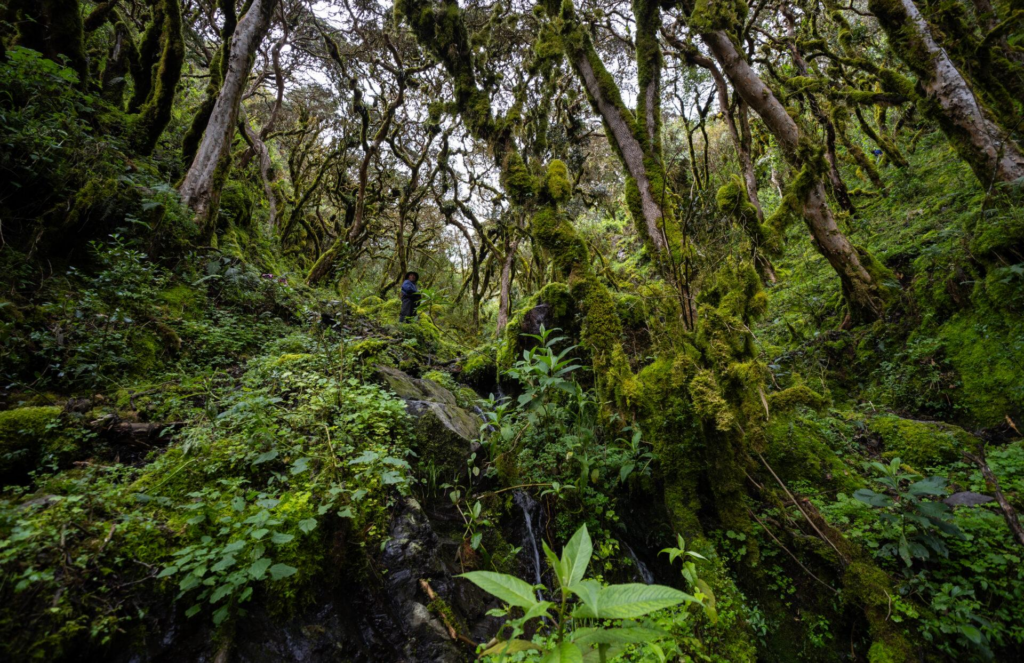
The constant humidity of the cloud forest creates ideal conditions for plants such as:
- Bromeliads
- Tree ferns
- Mosses
- Lichens
These plants capture moisture from the mist while providing essential microhabitats for countless insects, amphibians, and other small organisms.
4. Queuña Forests
Some sections of the trek pass through forests of Queuña (Polylepis), one of the highest-growing tree species in the world.
Queuña trees:
- Thrive in freezing temperatures
- Help conserve water
- Protect soil from erosion
- Provide shelter for birds and small mammals
Today, these unique forests are the focus of important conservation programs due to their ecological significance.
The Wildlife of the Salkantay Trek
Wildlife changes dramatically as the landscape evolves throughout the trek.
Although many animals are naturally shy and difficult to spot, they play vital roles in maintaining the ecological balance of the region.
1. The Andean Condor
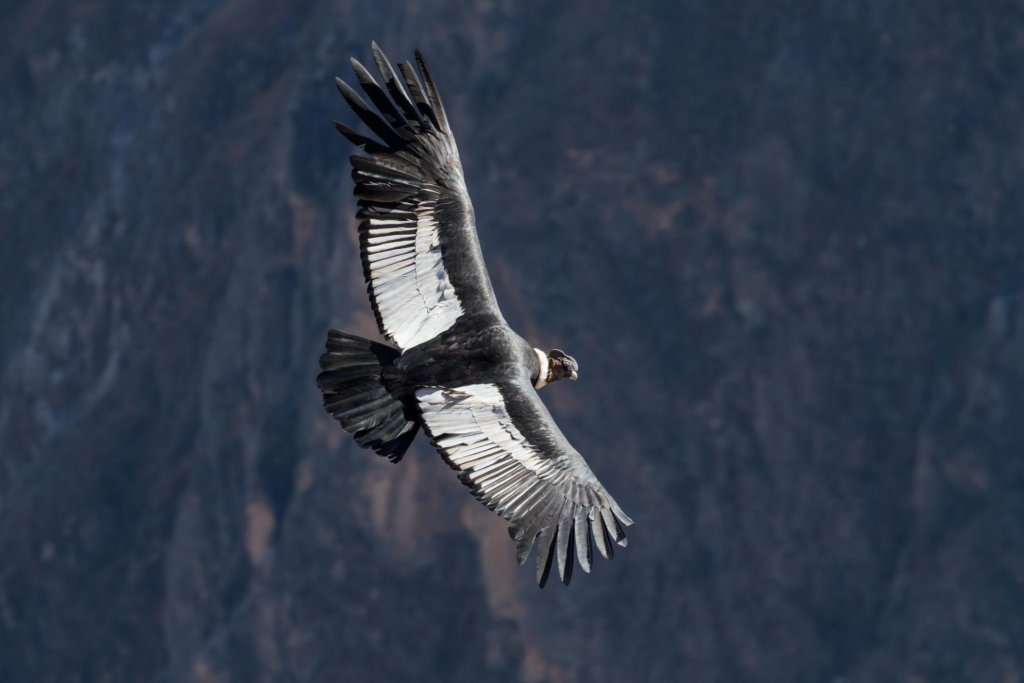
The Andean Condor is one of South America’s most iconic birds.
With a wingspan exceeding three meters (10 feet), it soars effortlessly on mountain air currents.
In Andean cosmology, the condor symbolizes the connection between the earthly world and the spiritual realm.
2. The Spectacled Bear
The Spectacled Bear is South America’s only native bear species.
It inhabits cloud forests and mountainous regions throughout the Andes.
Although sightings during the trek are rare, its presence is an important indicator of a healthy and well-preserved ecosystem.
3. The Vizcacha
Vizcachas are small mammals closely related to chinchillas.
They are often seen resting on large rock formations in the high-altitude sections of the trail.
Their thick fur allows them to survive the cold Andean climate.
4. The Andean Fox
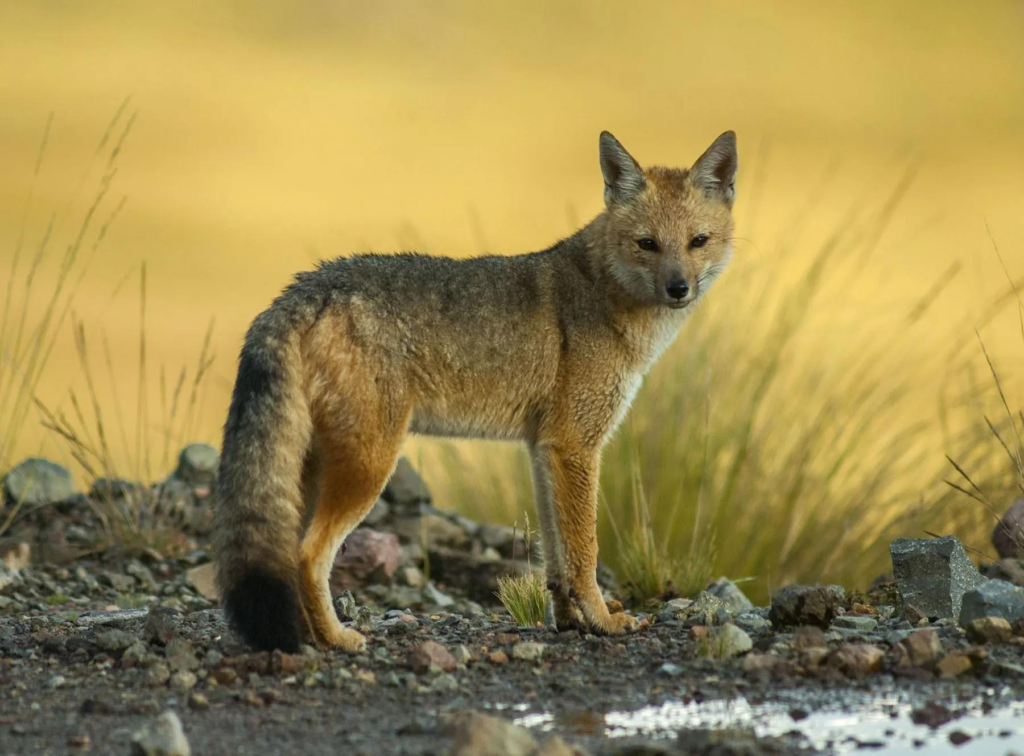
The Andean Fox inhabits various regions of the mountain range.
Highly adaptable, it feeds on:
- Small mammals
- Birds
- Insects
- Fruits
It generally avoids contact with humans and is rarely encountered.
Birdwatching Along the Salkantay Trek

El Salkantay Trek es también un destino ideal para la observación de aves.
Entre las especies más representativas destacan:
Gallito de las Rocas
Ave nacional del Perú, conocida por su llamativo plumaje naranja y sus rituales de cortejo.
Colibríes
Numerosas especies visitan las flores del bosque nuboso.
Tangaras
Pequeñas aves de intensos colores que habitan los bosques andinos.
Caracaras y halcones
Frecuentes en las zonas abiertas de alta montaña.
La Importancia de Conservar Estos Ecosistemas
Los ecosistemas del Salkantay Trek desempeñan funciones esenciales:
- Regulan el ciclo del agua.
- Protegen la biodiversidad.
- Almacenan carbono.
- Conservan especies endémicas.
Sin embargo, enfrentan desafíos como:
- Cambio climático.
- Retroceso de los glaciares.
- Presión turística.
- Pérdida de hábitats.
Por ello es fundamental que los visitantes practiquen un turismo responsable.
Consejos para Observar la Flora y Fauna Durante el Trek
- Mantente en los senderos autorizados.
- No alimentes a los animales silvestres.
- Evita hacer ruidos fuertes.
- Lleva binoculares para observar aves.
- No recojas plantas ni flores.
- Respeta las normas de conservación.
Pequeñas acciones contribuyen a proteger este valioso patrimonio natural.
Curiosidades sobre la Biodiversidad del Salkantay Trek
1. La ruta atraviesa varios ecosistemas en pocos días.
2. El Nevado Salkantay alimenta ríos y lagunas gracias al deshielo de sus glaciares.
3. En el bosque nuboso crecen numerosas especies de orquídeas.
4. El oso de anteojos habita las montañas cercanas, aunque rara vez se deja ver.
5. El cóndor andino puede aprovechar las corrientes de aire para recorrer grandes distancias sin batir las alas.
6. Los bosques de queuña ayudan a conservar el agua y proteger los suelos.
7. El cambio de altitud permite observar una gran variedad de especies en un solo recorrido.
8. El Santuario Histórico de Machu Picchu es reconocido por su extraordinaria biodiversidad.
Preguntas Frecuentes
¿Qué animales se pueden observar durante el Salkantay Trek?
Es posible observar aves, vizcachas, zorros andinos y, con mucha suerte, especies más esquivas como el oso de anteojos. La fauna visible dependerá de la temporada, el clima y el horario de la caminata.
¿Hay muchas especies de plantas en la ruta?
Sí. El recorrido atraviesa distintos ecosistemas donde crecen pastizales altoandinos, bosques de queuña, orquídeas, bromelias, helechos y una gran variedad de especies nativas.
¿Cuál es la mejor época para observar la naturaleza?
La temporada seca (aproximadamente entre abril y octubre) ofrece mejores condiciones para caminar y observar paisajes. En la temporada de lluvias la vegetación suele estar más verde y muchas plantas florecen.
¿Es importante respetar la flora y fauna?
Sí. La conservación de estos ecosistemas depende del comportamiento responsable de todos los visitantes.
¿Por qué el Salkantay Trek tiene tanta biodiversidad?
Porque la ruta atraviesa un amplio gradiente de altitudes y climas, desde la puna altoandina hasta la ceja de selva, creando hábitats muy diversos para plantas y animales.
Conclusión
El Salkantay Trek es mucho más que un camino hacia Machu Picchu. Es una travesía por algunos de los ecosistemas más diversos de los Andes, donde la naturaleza cambia constantemente y cada etapa revela nuevas especies de flora y fauna.
Desde el imponente Nevado Salkantay hasta los bosques nubosos llenos de orquídeas y aves de vivos colores, esta ruta demuestra la extraordinaria riqueza natural del Perú. Recorrerla no solo significa admirar paisajes espectaculares, sino también comprender la importancia de proteger un entorno que ha sido hogar de innumerables especies y parte esencial de la cultura andina durante siglos.
Para quienes aman la naturaleza, la fotografía o el ecoturismo, el Salkantay Trek ofrece una experiencia inolvidable que combina aventura, biodiversidad e historia en un solo recorrido.