
Introduction
For more than five centuries, Machu Picchu has stood strong against earthquakes, heavy rainfall, landslides, and the passage of time. While many modern structures require constant maintenance and repairs, the ancient Inca citadel continues to amaze the world with the remarkable resilience of its architecture.
How was a 15th-century civilization able to build a city capable of withstanding the frequent earthquakes of the Andes without using cement, steel, or modern machinery?
The answer lies in the extraordinary knowledge of Inca engineers, who developed innovative construction techniques perfectly adapted to the mountainous environment. By combining architecture, geology, and careful observation of nature, they created buildings that were flexible, durable, and highly resistant to seismic activity.
In this guide, you’ll discover the secrets behind the earthquake-resistant engineering of Machu Picchu and learn why it remains one of the greatest engineering achievements in human history.
Machu Picchu: A City Built in an Earthquake Zone
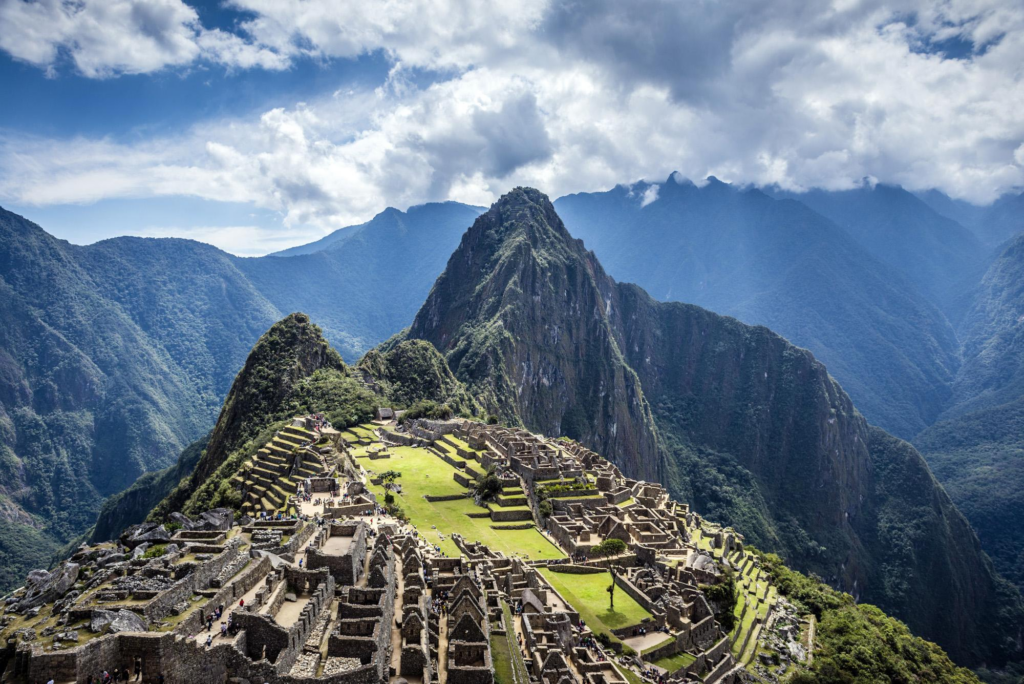
Machu Picchu is located high in the Andes Mountains, a region that has experienced seismic activity for millions of years.
The Incas understood this natural phenomenon through generations of experience and observation.
Rather than ignoring the risks, they designed a city capable of coexisting with earthquakes and the challenging mountain landscape.
Every wall, terrace, and staircase was carefully engineered to withstand both powerful earthquakes and the intense rainfall typical of the region.
The Secret Lies in the Stones
One of the most remarkable features of Machu Picchu is the incredible precision with which its stones were carved.
Each block was meticulously shaped to fit perfectly against its neighboring stones without the use of mortar or cement.
This construction method is known as polygonal masonry, one of the defining characteristics of Inca architecture.
Every stone has a unique shape that interlocks precisely with the others, creating an exceptionally stable structure.
Why Didn’t the Incas Use Cement?

Unlike many modern buildings, the Incas did not bind their stones together with mortar.
Far from being a disadvantage, this decision made their structures far more resistant to earthquakes.
When an earthquake occurs:
- The stones can move slightly.
- They absorb part of the seismic energy.
- Once the shaking stops, they naturally settle back into place.
This flexibility prevents walls from cracking or collapsing under seismic stress.
It is a remarkable engineering principle that continues to inspire modern architects and engineers today.
Trapezoidal Shapes: More Than Just a Design Choice
A distinctive feature of Inca architecture is the use of trapezoidal doors, windows, and niches.
This design offered several structural advantages:
- Better weight distribution
- Increased stability
- Reduced structural deformation
- Greater resistance to earthquakes
The trapezoidal shape allowed buildings to remain balanced even during powerful seismic events.
Walls with a Strategic Inward Lean

A closer look at Machu Picchu reveals that many of its walls are not perfectly vertical.
Instead, they lean slightly inward.
This subtle design feature helps to:
- Increase structural stability
- Reduce the risk of overturning
- Distribute weight more efficiently
Although simple, this solution is highly effective for buildings located in earthquake-prone regions.
The Hidden Foundations of Machu Picchu
Much of the Incas’ engineering work remains hidden beneath the surface.
Before constructing their buildings, they carefully prepared the foundations using layers of:
- Large rocks
- Crushed stone
- Gravel
- Sand
These materials improved drainage while also helping absorb vibrations generated during earthquakes.
Thanks to these solid foundations, the structures have remained stable for centuries.
The Terraces Also Protected the City

The famous agricultural terraces served a much greater purpose than food production.
They also functioned as massive retaining walls.
These terraces helped to:
- Stabilize the mountainside
- Reduce soil erosion
- Improve water drainage
- Minimize the risk of landslides
Without this sophisticated terrace system, Machu Picchu would have been far more vulnerable to both rainfall and geological instability.
Architecture Designed to Work with Nature
Rather than dramatically reshaping the mountain, the Incas carefully studied the natural landscape before building.
Their structures were adapted to:
- The natural slope of the terrain
- Existing rock formations
- Natural watercourses
- Geological conditions
This harmonious integration with the environment greatly reduced the impact of natural disasters.
Engineering Based on Observation

Although they lacked modern scientific instruments, Inca engineers developed an extraordinary understanding of construction through centuries of practical experience.
They closely observed:
- The behavior of mountains
- The movement of water
- The effects of earthquakes
- The durability of different materials
This knowledge was passed down through generations and applied to some of the most remarkable structures of the Inca Empire.
What Do Modern Engineers Say?
Architects, archaeologists, and engineers from around the world continue to study Machu Picchu to better understand its construction techniques.
Many agree that the solutions developed by the Incas remain outstanding examples of sustainable engineering and resilient architecture.
The combination of flexible stonework, careful adaptation to the landscape, and exceptional drainage systems explains why Machu Picchu has survived for more than 500 years with remarkably little structural damage.
Fascinating Facts About Machu Picchu’s Earthquake-Resistant Engineering
- The stones were assembled without using mortar or cement.
- Every stone block was individually carved for a precise fit.
- Doors and windows feature trapezoidal shapes to improve structural stability.
- Many walls are intentionally built with a slight inward lean.
- Much of the city’s engineering lies hidden beneath the ground.
- The agricultural terraces help prevent landslides.
- Advanced drainage systems reduce the impact of heavy rainfall.
- Machu Picchu has survived countless earthquakes for more than five centuries.
Frequently Asked Questions About Machu Picchu’s Earthquake-Resistant Engineering
Why doesn’t Machu Picchu collapse during earthquakes?
Its structures were designed to absorb and distribute seismic energy through precisely fitted stone blocks, solid foundations, and architecture that adapts naturally to the terrain.
Did the Incas use cement?
No. The stones were carved with exceptional precision so they could fit tightly together without mortar.
What is polygonal masonry?
Polygonal masonry is a construction technique in which irregularly shaped stone blocks fit perfectly together, creating exceptionally stable and earthquake-resistant walls.
Did the agricultural terraces also protect the city?
Yes. In addition to supporting agriculture, they stabilized the mountainside, controlled rainwater, and reduced the risk of landslides.
Are Inca construction techniques still studied today?
Absolutely. Engineers, architects, and archaeologists continue to analyze these methods to understand how an ancient civilization built structures that remain so durable and resilient.
Conclusion
The earthquake-resistant engineering of Machu Picchu stands as a testament to the extraordinary knowledge and ingenuity of the Inca civilization. Without modern machinery or materials such as steel and concrete, Inca builders developed innovative construction techniques that enabled an entire city to withstand earthquakes, heavy rainfall, and more than five centuries of natural wear.
Every carefully carved stone, every inward-leaning wall, every terrace, and every drainage system forms part of a masterfully integrated design that works in harmony with nature rather than against it.
Today, Machu Picchu is far more than an archaeological wonder. It is a timeless example of sustainable engineering, environmental adaptation, and ancestral wisdom that continues to inspire engineers, architects, and travelers from around the world—proving that the greatest achievements are built not only with technology, but with knowledge, observation, and deep respect for the natural landscape.