
Introduction
The Inca Trail—known internationally by that name—is far more than just a hiking route. It is one of the most important historical paths in the Americas and one of the greatest engineering feats of the Inca Empire.
For centuries, this network of trails connected cities, ceremonial centers, fortresses, and communities across the Andes. Today, the Inca Trail offers a journey through history, archaeology, and Andean culture, allowing thousands of travelers to follow in the footsteps of the ancient Incas all the way to the legendary citadel of Machu Picchu.
The Origin of the Inca Trail
Over 500 years ago, the Inca Empire developed an extraordinary road network known as the Qhapaq Ñan, which means “Main Road” in Quechua.
This impressive network of roads spanned more than 30,000 kilometers across territories that are now part of Peru, Ecuador, Bolivia, Chile, Argentina, and Colombia.
The Inca Trail to Machu Picchu was one of the most important sections of this network, used by nobles, priests, messengers, and imperial officials to travel between the empire’s major administrative and religious centers.
The Qhapaq Ñan: The Great Road Network of the Inca Empire
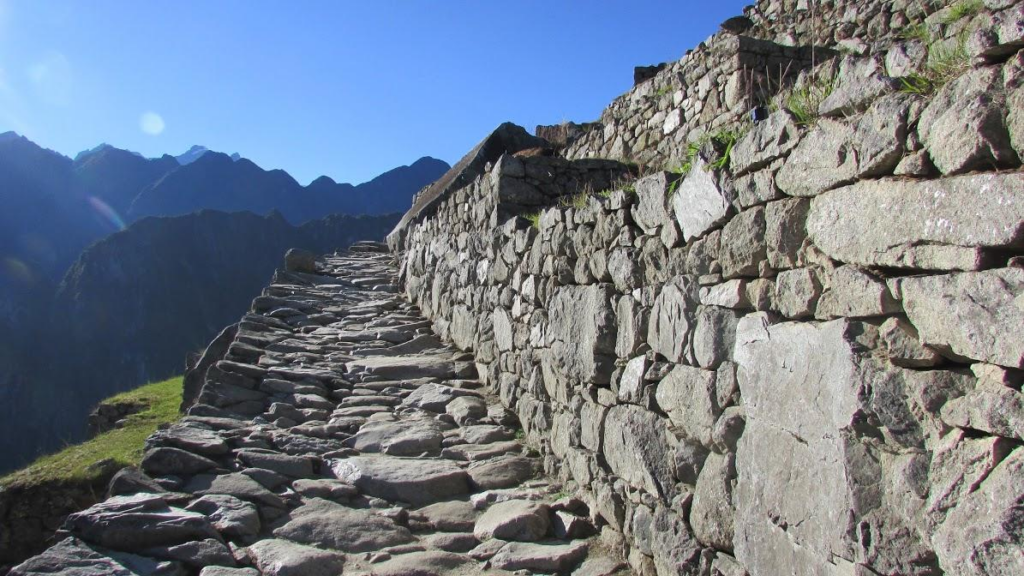
The Qhapaq Ñan was one of the most impressive infrastructure projects of the ancient world.
The Incas built roads that traversed:
- Mountains over 5,000 meters high.
- Deep canyons.
- Cloud forests.
- Coastal deserts.
- Agricultural valleys.
The network enabled rapid communication between the empire’s different regions and facilitated the transport of food, resources, and messages.
The famous chasquis—Inca messengers—traveled these roads, carrying information from one region to another using a relay system.
Why Was the Inca Trail to Machu Picchu Built?
Historians believe that the route known today as the Inca Trail served a ceremonial and religious purpose.
Unlike other routes used primarily for trade or administration, this path appears to have been designed to lead travelers to one of the empire’s most sacred sites: Machu Picchu.
The route passes through various archaeological sites that likely served as places for rest, astronomical observation, and spiritual preparation before reaching the citadel.
Many researchers consider the Inca Trail to have been a form of sacred pilgrimage reserved for the Inca Empire’s elite.
Inca Engineering: A Masterpiece of the Andes
One of the most fascinating aspects of the Inca Trail is the incredible engineering used in its construction.
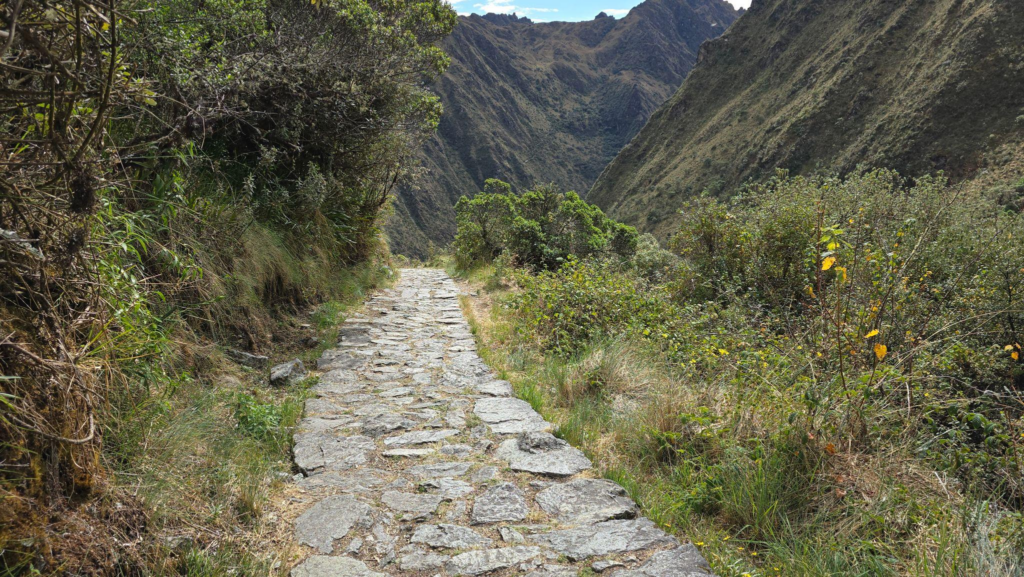
Despite lacking modern tools, the Incas managed to build:
- Stone stairways perfectly integrated into the mountain.
- Retaining walls to prevent landslides.
- Drainage channels that still function after centuries.
- Bridges to cross deep valleys.
- Paths adapted to extremely difficult terrain.
Many of these structures remain in an excellent state of preservation, demonstrating the advanced engineering knowledge possessed by the Incas.
The Archaeological Sites of the Inca Trail
One of the greatest treasures of this route is the archaeological complexes found along the way.
Llactapata
Considered an important agricultural and administrative center, it offers spectacular views of the surrounding mountains.
Runkurakay
A semicircular structure that likely served as a lookout and resting point for travelers.
Sayacmarca
Built atop a mountain ridge, this citadel is notable for its strategic location and complex architecture.
Phuyupatamarca
Known as “The City Above the Clouds,” it is one of the most spectacular sites on the Inca Trail due to its panoramic views.
Wiñay Wayna
One of the most impressive archaeological complexes on the route. Its name means “Forever Young,” and it is distinguished by its agricultural terraces and ceremonial temples.