
Introduction
Among Peru’s most imposing mountains stands the majestic Mount Salkantay, one of the most revered peaks in the Andes and one of the most important natural symbols of the Cusco region. Rising to an altitude of 6,271 meters (20,574 feet) above sea level, this mountain has been considered a protective deity by Andean communities for centuries.
Long before thousands of travelers hiked its trails on their way to Machu Picchu, Salkantay already held a special place in the worldview of the Inca people. Its massive presence, covered in perpetual snow and surrounded by ancestral legends, turned this mountain into a symbol of strength, spirituality, and connection with nature.
What Does Salkantay Mean?
The name “Salkantay” comes from the Quechua language. Various studies suggest it can be interpreted as:
- “Wild Mountain”
- “Untamed Mountain”
- “Inaccessible Mountain”
These interpretations perfectly reflect the imposing character of this mountain, whose rugged peaks and glaciers have challenged explorers and mountaineers for centuries.
For Andean communities, Salkantay represents much more than a mountain; it is a spiritual being capable of protecting, blessing, and maintaining the balance of nature.
Salkantay in the Inca Worldview
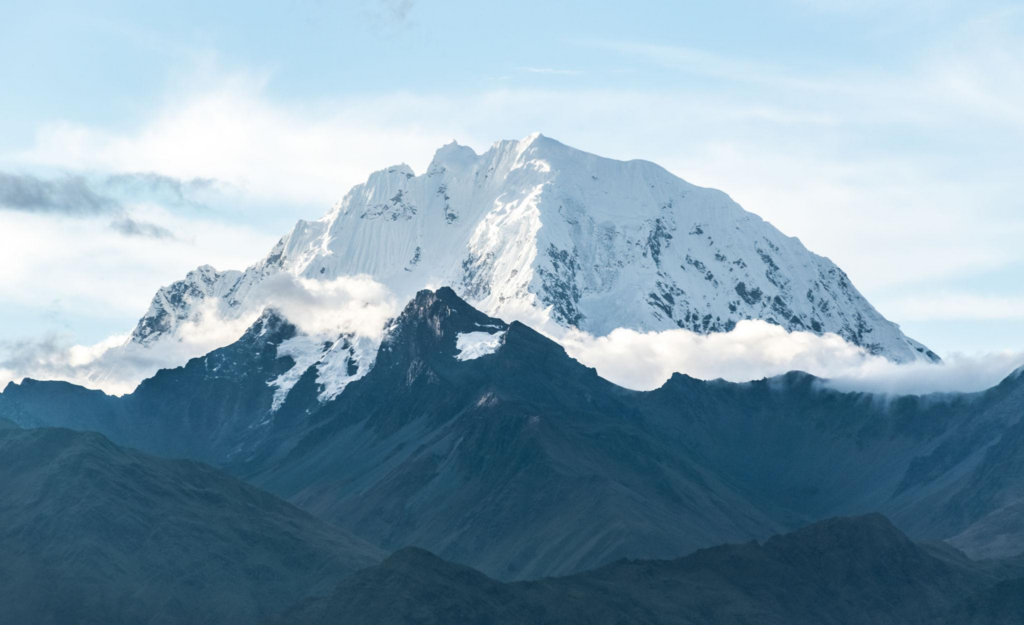
In Inca culture, mountains were known as Apus—sacred spirits considered guardians of the communities.
The Incas believed that the Apus controlled natural phenomena such as:
- Rain.
- The crops.
- The rivers.
- The fertility of the land.
- The protection of the villages.
Within this spiritual hierarchy, Salkantay was one of the most important Apus of the ancient Inca Empire, alongside other sacred mountains in the Cusco region.
Religious ceremonies held in honor of Salkantay sought to give thanks for bountiful harvests and to ask for protection for Andean communities.
The Legend of Apu Salkantay
According to Andean oral traditions, Apu Salkantay was one of the region’s great protectors.
One of the best-known legends tells of how the Apus of the Andes gathered to decide how to help the people during times of scarcity. As a result, Salkantay sent food and resources down to the valleys, becoming a symbol of generosity and abundance.
Although these stories are part of oral tradition, they continue to be passed down from generation to generation and remain an important part of Andean cultural identity.
Geographical Location of Mount Salkantay

Mount Salkantay is located in the Vilcabamba Range, in the Cusco region, approximately 60 kilometers northwest of the ancient capital of the Inca Empire.
Its main characteristics are:
- Altitude: 6,271 meters above sea level.
- It is the second-highest mountain in the Cusco region.
- It is part of the Vilcabamba mountain range.
- It feeds important watersheds in the region.
The mountain dominates the Andean landscape and can be seen from various points in the region.
The Importance of Salkantay for Present-Day Communities
Despite the passage of time, respect for Salkantay endures.
Many Quechua communities continue to perform traditional ceremonies known as:
Payment to the Earth
These rituals involve offering coca leaves, flowers, food, and other symbolic items as a gesture of gratitude to Pachamama and the Apus.
For local communities, Salkantay remains a spiritual protector and a source of life, thanks to the water flowing from its glaciers.
Salkantay and Climate Change
One of the major challenges today is the retreat of Andean glaciers.
In recent decades, the glaciers of Nevado Salkantay have shown a significant reduction due to rising global temperatures.
This raises concerns because:
- Reduces natural water reserves.
- Affects local ecosystems.
- Impacts communities that depend on these water sources.
- Alters the natural landscapes of the Andes.
The conservation of these mountains is fundamental to the region’s environmental future.
Why Is Salkantay Famous Worldwide?
Salkantay is currently internationally recognized for:
- Its stunning natural beauty.
- Its historical and spiritual significance.
- Being one of Peru’s most iconic mountains.
- Being part of one of the most famous trekking routes to Machu Picchu.
- Its spectacular glacial landscapes.
Thousands of travelers visit the region every year to admire this natural wonder up close.
Interesting Facts About Mount Salkantay
1. It is one of the most sacred mountains in Peru
The Incas considered it one of the most powerful Apus (sacred mountain spirits) in the empire.
2. Its peak remains snow-capped for much of the year
Despite climate change, it remains one of the most impressive snow-capped peaks in the Andes.
3. It is part of the Vilcabamba Mountain Range
One of the most important mountain ranges in southern Peru.
4. Its name is of Quechua origin
And it reflects the mountain’s strength and indomitable character.
5. It continues to be revered by Andean communities
Ancestral traditions remain alive to this day.
Frequently Asked Questions about Mount Salkantay
How high is Mount Salkantay?
Mount Salkantay reaches an elevation of 6,271 meters above sea level.
What does the word “Salkantay” mean?
It comes from Quechua and is commonly interpreted as “Wild Mountain” or “Indomitable Mountain.”
Why was it important to the Incas?
Because it was considered an Apu—a sacred mountain that protected communities and governed elements of nature.
Where is Salkantay located?
It is located in the Vilcabamba mountain range, in the Cusco region of Peru.
Are ceremonies still held in honor of Salkantay?
Yes. Many Andean communities maintain traditional rituals of gratitude and respect for this sacred mountain.
Is Salkantay connected to Machu Picchu?
Yes. Historically, it was part of the sacred landscape of the Andean world, and today it is known for the famous trekking route that leads to Machu Picchu.
Conclusion
Mount Salkantay is far more than just a mountain. It is a living symbol of the history, spirituality, and identity of the Peruvian Andes. From the time of the Incas to the present day, this imposing peak has inspired respect, admiration, and devotion. Learning its history offers a deeper understanding of the profound connection between nature and Andean culture—a relationship that remains vital within the communities living under the protection of this majestic Apu.