
Introduction
Long before it became one of the world’s most famous trekking routes, the Salkantay Trek served as an important pathway for the ancient inhabitants of the Andes, connecting communities, territories, and sacred places across the region.
Surrounded by towering mountains, glaciers, and deep valleys, this remarkable route has a profound connection to the history of the Inca Empire. Its significance extends beyond its proximity to Machu Picchu—it is also closely linked to Salkantay Mountain, one of the most revered Apus, or sacred mountain spirits, in Andean culture.
Walking the Salkantay Trek is more than a breathtaking outdoor adventure; it is a journey through landscapes where history, Andean traditions, and ancient spiritual beliefs continue to thrive.
Salkantay Mountain: The Great Guardian of the Andes

The centerpiece of this legendary route is Salkantay Mountain, an awe-inspiring peak located in the Vilcabamba Mountain Range.
Rising to approximately 6,271 meters (20,574 feet) above sea level, it is one of the highest and most important mountains in the Cusco region.
For the ancient Andean peoples, mountains were far more than natural landmarks—they were sacred beings known as Apus, believed to watch over and protect local communities.
Apu Salkantay was regarded as a powerful guardian who safeguarded the valleys, supplied water through its glaciers, and maintained the balance of nature.
What Does “Salkantay” Mean?
The name Salkantay originates from the Quechua language.
Although there are different interpretations, it is traditionally associated with meanings such as:
- Wild Mountain
- Untamed Mountain
- Powerful Spirit
These interpretations perfectly reflect the character of Salkantay—massive, majestic, and challenging to conquer.
For the Incas, place names were deeply connected to the spiritual energy and natural characteristics of the landscape.
Salkantay and the Inca Empire
As the Inca Empire expanded, Cusco became the political and spiritual center of a vast civilization.
To unite its territories, the Incas constructed an extensive road system known as the Qhapaq Ñan, or the Great Inca Road.
Within this immense network were numerous secondary routes connecting:
- Ceremonial centers
- Agricultural communities
- Sacred sites
- Trade and communication routes
The Salkantay region formed part of these ancient Andean corridors, linking Cusco with the remote valleys surrounding Machu Picchu.
A Route Between Sacred Mountains and the Lost Inca City
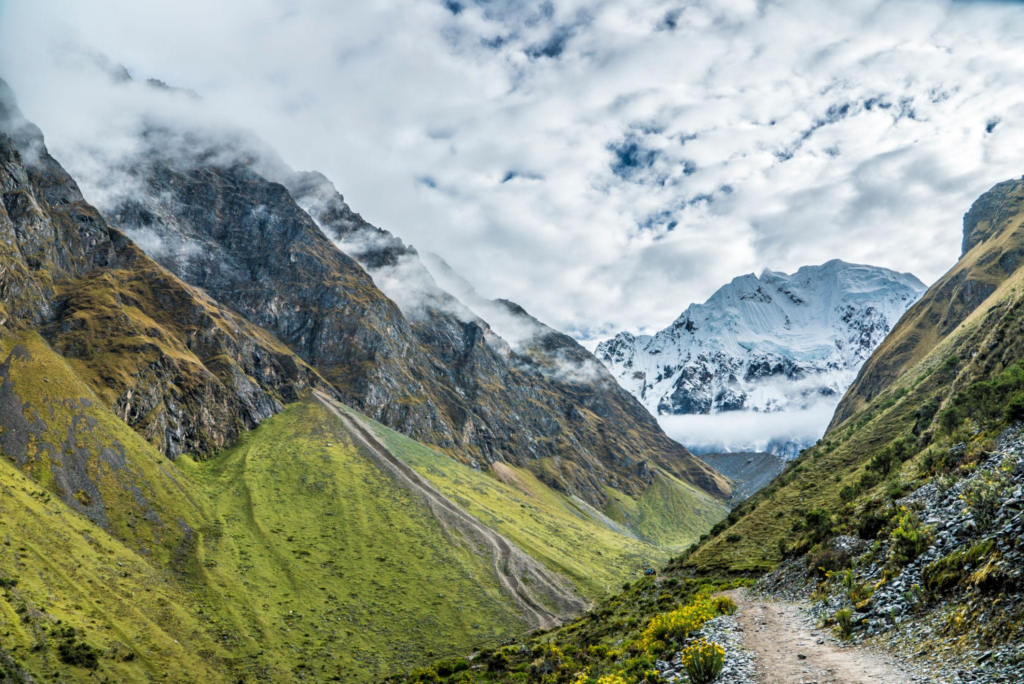
Today’s Salkantay Trek leads travelers toward Machu Picchu through an extraordinary variety of ecosystems, including:
- High Andean mountains
- Glacial lakes
- Cloud forests
- Tropical valleys
For the Incas, these dramatic transitions represented a symbolic journey through different natural worlds.
Ancient travelers witnessed the landscape gradually transform from the cold highlands of the Andes to the warm cloud forests near the Amazon Basin.
The Spiritual Connection Between Salkantay and Machu Picchu
In the Andean worldview, sacred mountains and ceremonial sites were deeply interconnected.
Machu Picchu was not built by chance—it was carefully positioned within a sacred landscape where surrounding mountains held immense spiritual importance.
Because of its towering presence, Salkantay Mountain became an essential part of the sacred environment surrounding the ancient citadel.
The Incas believed that the Apus influenced:
- Weather patterns
- Agricultural productivity
- Fertility
- The protection of local communities
For this reason, traveling near these mountains was considered not only a physical journey but also a spiritual experience.
The Waters of Salkantay: A Source of Life
One of Salkantay Mountain’s greatest gifts is its glaciers.
For centuries, these glaciers have supplied rivers and lakes that sustain ecosystems and communities throughout the surrounding valleys.
To the Incas, water was one of the most sacred elements of life.
It symbolized:
- Life
- Renewal
- Fertility
The remarkable agricultural success of the Inca civilization depended on sophisticated water management systems that made farming possible even in rugged mountain terrain.
Andean Communities and the Living Inca Heritage
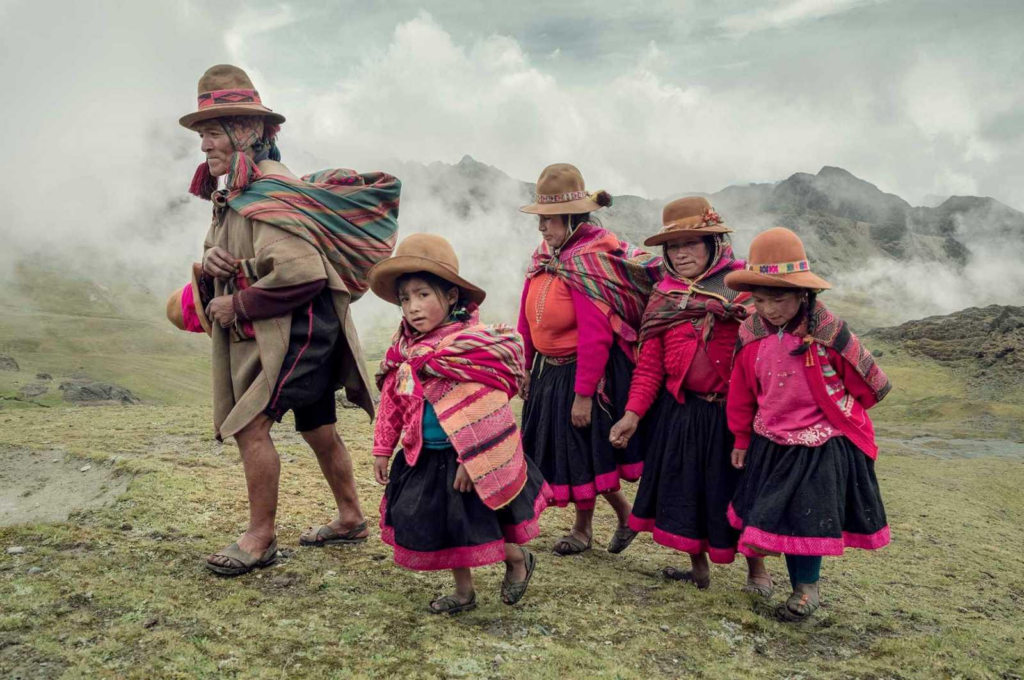
Although the Inca Empire disappeared centuries ago, many of its traditions remain alive in the communities surrounding Salkantay.
These enduring customs include:
- Deep respect for the sacred mountains
- Traditional ceremonies of gratitude to nature
- Ancient agricultural knowledge
- Preservation of the Quechua language and customs
These traditions demonstrate that the connection between people and nature continues to be a fundamental part of Andean culture.
The Salkantay Trek Today
Today, the Salkantay Trek is recognized as one of the best alternatives to the Classic Inca Trail.
Its worldwide popularity comes from its unique combination of:
- History
- Nature
- Adventure
- Andean culture
- Spectacular scenery
Along the route, hikers can experience incredible landmarks such as:
- Humantay Lake
- Salkantay Pass
- Cloud forests
- The valleys leading toward Machu Picchu
Every section of the trek offers a different perspective on the natural and cultural richness of Peru.
Interesting Facts About the Salkantay Trek
- Salkantay is one of the highest mountains in the Cusco region.
- The Incas revered mountains as sacred protective spirits known as Apus.
- The route connects the high Andes with the lush cloud forests.
- The scenery changes dramatically from glaciers to tropical vegetation.
- The trail follows ancient Andean routes once used by the Incas.
- Salkantay Mountain remains one of the most sacred peaks in Andean tradition.
- The trek ends near the legendary citadel of Machu Picchu.
- It is considered one of the most spectacular hiking adventures in South America.
Frequently Asked Questions About the Salkantay Trek and the Incas
Was the Salkantay Trek used by the Incas?
The Salkantay region was connected by ancient Andean roads that formed part of the broader transportation and communication network of the Inca Empire.
Why was Salkantay important to the Incas?
Salkantay was considered a sacred Apu and played a vital role in Andean spirituality due to its connection with water, nature, and the surrounding landscape.
What is the connection between Salkantay and Machu Picchu?
Both are part of the sacred geography of the Andes and are linked through ancient routes and long-standing cultural traditions.
What is an Apu?
In Andean belief, an Apu is a sacred mountain spirit that protects nearby communities and the natural environment.
When is the best time to hike the Salkantay Trek?
The best hiking conditions are generally found between April and October, during Peru’s dry season.
Conclusion
The Salkantay Trek is much more than a mountain adventure—it is a journey through the living history of the Andes and a testament to the profound relationship the Incas maintained with nature.
The majestic Salkantay Mountain, the ancient trails, and the route’s connection to Machu Picchu make this trek a truly unforgettable experience where every step follows in the footsteps of one of the greatest civilizations in the Americas.
Hiking the Salkantay Trek is not only an opportunity to witness breathtaking landscapes but also to discover a place where history, culture, spirituality, and nature remain beautifully intertwined.