
Introduction
At the heart of the ancient citadel of Machu Picchu stands one of its most iconic and mysterious structures: the Temple of the Three Windows.
This remarkable stone building is admired not only for its exceptional architecture but also for its profound significance within the Andean worldview. Its three massive windows, opening toward the breathtaking Andes Mountains, have inspired countless theories about their purpose, symbolism, and connection to Inca spirituality.
For many archaeologists and historians, the Temple of the Three Windows represents the perfect harmony between architecture, religion, and the Inca understanding of the universe.
Where Is the Temple of the Three Windows?
The Temple of the Three Windows is located within the Sacred Plaza of Machu Picchu, one of the most important ceremonial areas of the ancient citadel.
This sacred sector is surrounded by several significant religious structures, including:
- The Main Temple
- The Priest’s House
- The Intihuatana Stone
- The Sacred Plaza
Its prominent location suggests that it was far more than an ordinary building—it likely served an important spiritual and ceremonial purpose.
The Meaning of the Three Windows
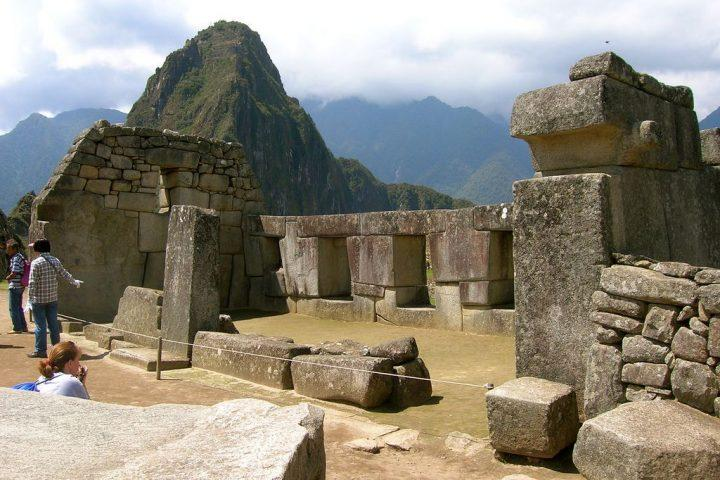
One of the temple’s greatest mysteries is the symbolic meaning behind its three large windows.
Although no written Inca records explain their exact purpose, archaeologists and scholars have developed several theories based on archaeological evidence and Andean traditions.
One of the most widely accepted interpretations connects the three windows to the Inca cosmology, representing the three realms of existence:
Hanan Pacha
The upper world, associated with the gods, the Sun, and the stars.
Kay Pacha
The earthly world where humans, animals, and everyday life exist.
Uku Pacha
The inner or underworld, associated with fertility, rebirth, and the spiritual realm.
This three-part vision of the universe formed the foundation of the Andean worldview.
The Legend of the Three Windows and the Origin of the Incas
According to ancient Andean traditions surrounding the origin of the Inca civilization, the three windows may symbolize the mythical birthplace of the first Inca ancestors.
Some historians believe they represent a sacred point of emergence, connected to ancient creation myths describing how the founders of the Inca Empire emerged from holy places before establishing their civilization.
Although these stories belong primarily to oral tradition rather than written history, they highlight the symbolic importance of sacred spaces within Inca architecture.
The Architecture of the Temple of the Three Windows
One of the temple’s most impressive features is the extraordinary precision of its stonework.
The Incas employed a sophisticated construction technique known as ashlar masonry, carefully carving each stone until it fit perfectly against neighboring blocks without the use of mortar.
The temple is distinguished by:
- Massive stone blocks
- Perfectly aligned walls
- Trapezoidal windows
- A design that harmonizes with the surrounding mountain landscape
Its construction demonstrates the exceptional engineering skills of the Inca civilization.
Why Are the Windows Trapezoidal?
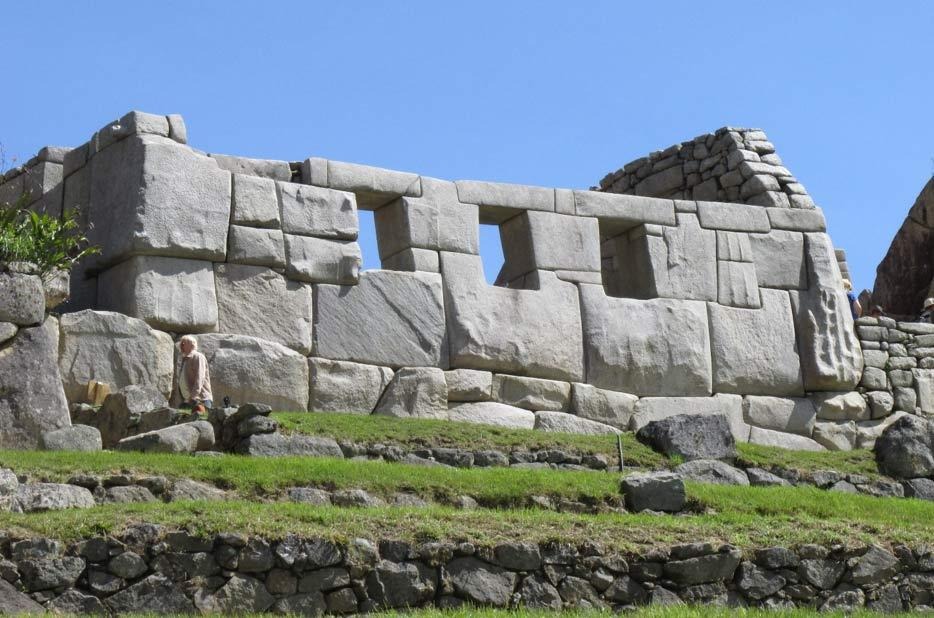
A defining characteristic of Inca architecture is the use of trapezoidal doors and windows.
This design was not merely decorative—it served important structural purposes.
Its advantages included:
- Greater structural stability
- Improved resistance to earthquakes
- More efficient weight distribution
Because the Andes are highly seismic, this architectural technique has allowed many Inca structures to survive for more than five centuries.
The Temple’s Connection to the Sun and Inca Astronomy
The Incas maintained a profound relationship with celestial bodies, especially the Sun God, Inti.
Many temples throughout the empire were designed according to:
- The position of the sun
- The solstices
- Seasonal changes
- Agricultural cycles
Although the exact purpose of the Temple of the Three Windows remains uncertain, many researchers believe it may have played a role in astronomical observations or ceremonies linked to the agricultural calendar.
The Temple and the Sacred Plaza
The Sacred Plaza served as one of the ceremonial centers of Machu Picchu.
Archaeologists believe it was used for:
- Religious ceremonies
- Sacred rituals
- Gatherings of the Inca elite
- Spiritual celebrations
The Temple of the Three Windows formed an essential part of this ceremonial complex, making it one of the most significant structures within Machu Picchu.
The Mystery of Its True Purpose
Despite decades of archaeological research, many questions about the temple remain unanswered.
Researchers continue investigating whether it served as:
- A temple dedicated to the Sun
- A ceremonial sanctuary
- A symbolic representation of the Inca origin myth
- An astronomical observatory
The absence of written Inca records leaves many of these questions open to interpretation.
This enduring mystery is one of the reasons why Machu Picchu continues to captivate visitors from around the world.
Interesting Facts About the Temple of the Three Windows
- It was built using enormous, precisely carved stone blocks.
- Its trapezoidal windows are a defining feature of Inca architecture.
- It is located within the Sacred Plaza of Machu Picchu.
- It is one of the most photographed landmarks in the ancient citadel.
- It may symbolize the three realms of the Inca universe.
- Its construction showcases the remarkable engineering skills of the Incas.
- Its exact purpose remains one of Machu Picchu’s greatest mysteries.
- It forms part of the most important religious sector of the ancient city.
Frequently Asked Questions About the Temple of the Three Windows
What does the Temple of the Three Windows represent?
Many researchers believe it symbolizes the three realms of the Andean cosmos: Hanan Pacha, Kay Pacha, and Uku Pacha.
Who built the Temple of the Three Windows?
It was constructed by the Incas during the development of Machu Picchu, most likely in the 15th century.
Where is it located?
The temple stands within the Sacred Plaza, in the religious sector of Machu Picchu.
Why does it have three windows?
There is no definitive answer, but several theories suggest they hold religious and cosmological significance connected to the Inca worldview.
Is the temple connected to the Sun?
Possibly. Since the Sun played a central role in Inca religion, many scholars believe the temple may have had astronomical or ceremonial functions related to solar worship.
Can visitors see the Temple of the Three Windows today?
Yes. The temple is included in several of the official Machu Picchu visitor circuits and remains one of the site’s most iconic attractions.
Conclusion
The Temple of the Three Windows is one of the most fascinating landmarks in Machu Picchu, combining extraordinary architecture, ancient history, and enduring mystery. Its perfectly crafted stone walls and three magnificent windows overlooking the Andes reflect the Incas’ deep connection with nature, spirituality, and the cosmos.
Although many of its secrets remain unknown, the temple continues to stand as a powerful symbol of the greatness of the Inca Empire and a lasting testament to the remarkable engineering and cultural achievements of one of the world’s most extraordinary civilizations.