
Introduction
The Inca Trail is much more than a hiking route through the mountains of Peru. Its ancient stone paths, hidden temples, and landscapes surrounded by sacred mountains hold stories that have survived for centuries.
Before becoming one of the world’s most famous hikes, this route was part of the Inca Empire’s vast road system known as Qhapaq Ñan. For the ancient inhabitants of the Andes, traversing these paths was a spiritual experience where nature, the gods, and humankind were deeply connected.
Over the years, Andean communities have passed down numerous legends about the Apus, protective spirits, lost cities, sacred temples, and the connection between the earthly world and the spiritual world.
In this blog we will discover some of the most fascinating myths and legends related to the Inca Trail.
The Inca Trail: A Route Between the Human World and the Sacred World
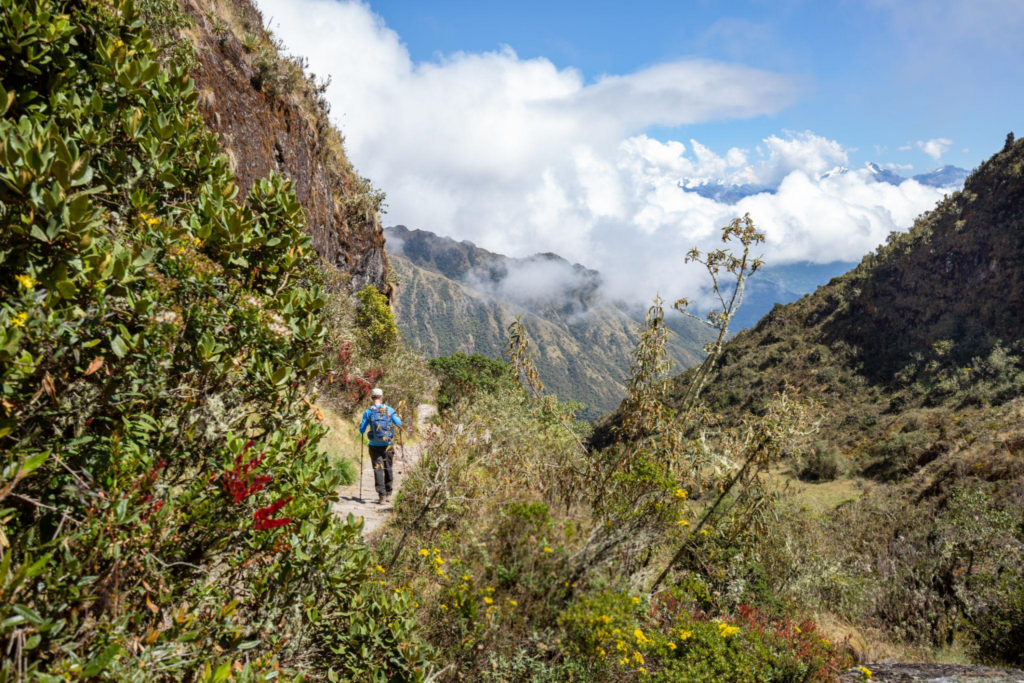
For the Incas, roads were not simply routes of transportation. They were spaces full of meaning.
The Inca Trail connected important ceremonial centers and allowed access to places considered sacred, such as the citadel of Machu Picchu.
According to the Andean worldview, travelers who journeyed along these routes crossed through different worlds:
- Kay Pacha: the world where human beings live.
- Uku Pacha: the inner or spiritual world.
- Hanan Pacha: the upper world related to the gods and stars.
For this reason, many Inca roads were considered routes of spiritual preparation.
The Legend of the Inca and the Sacred City of Machu Picchu
One of the best-known stories recounts that Machu Picchu was built as a special place to connect the Inca ruler with the gods.
According to some traditions, the emperor arrived via sacred paths accompanied by priests and nobles to perform ceremonies in honor of the Sun.
During the journey, travelers had to purify themselves physically and spiritually before reaching the sanctuary.
Although researchers continue to study the true function of Machu Picchu, this legend reflects the profound religious importance these places held for the Incas.
The Apus: The Guardians of the Mountains
The Apus: The Guardians of the Mountains
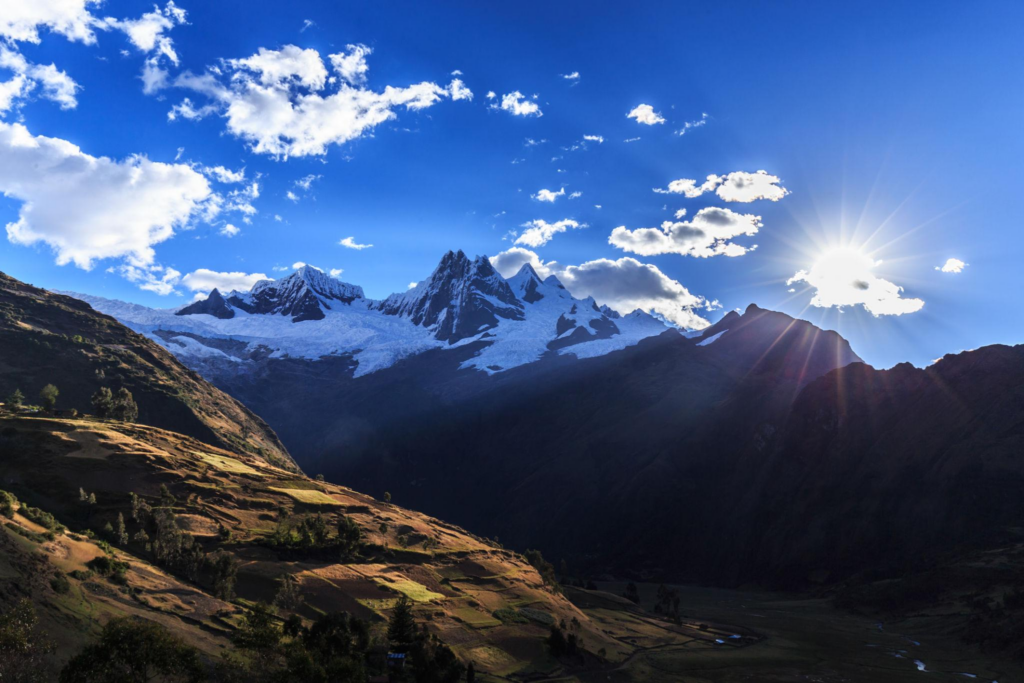
One of the most important beliefs of the Andean peoples is the existence of the Apus.
The Apus are considered protective spirits that inhabit the mountains.
For the ancient Incas, the mountains had a life of their own and protected the nearby communities.
Along the Inca Trail, travelers pass near several mountains considered sacred.
It was believed that before embarking on an important journey, it was necessary to ask permission and protection from the Apus through traditional ceremonies.
The Legend of the Stone Guardians of the Inca Trail
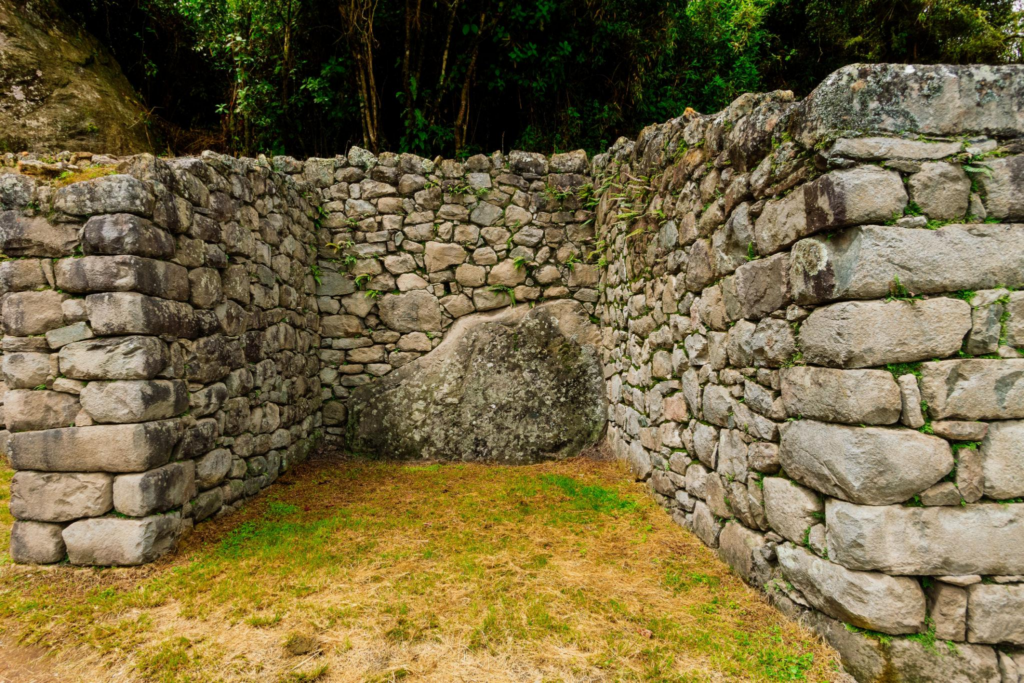
There is an ancient Andean belief that some stones placed along the Inca roads were not simply structures.
According to legend, certain spiritual guardians could transform into stone to protect important places.
These guardians watched over the roads at night and protected travelers with good intentions.
For this reason, many communities believe that some ancient structures possess a special energy.
The Legend of Wiñay Wayna: The Forever Young City
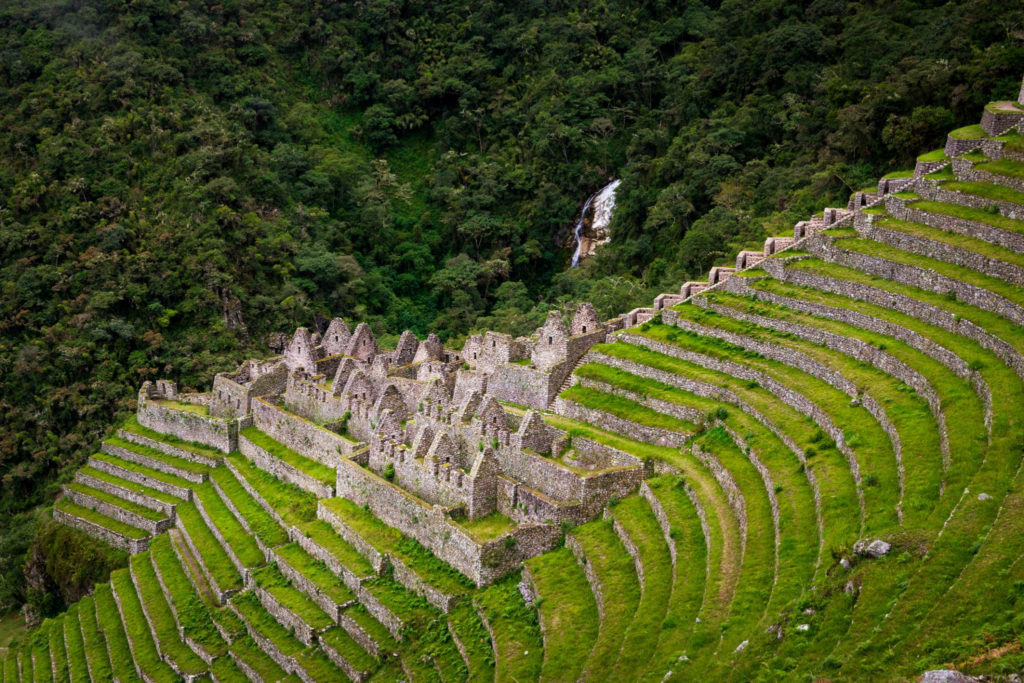
One of the most impressive places on the Inca Trail is Wiñay Wayna, whose name in Quechua means:
“Always Young” or “Eternally Young.”
According to tradition, this place was associated with fertility, renewal, and a connection to nature.
Its agricultural terraces, water sources, and temples demonstrate its importance along the route to Machu Picchu.
Some believe its name represents the idea that the energy of the Andes never ages, but rather remains alive through its mountains and villages.
The Legend of Inti Punku: The Gate of the Sun
The famous Inti Punku, known as the Sun Gate, is the point where many travelers have their first glimpse of Machu Picchu.
For the Incas, the Sun, or Inti, was the principal deity of the empire.
According to their beliefs, this place served as a ceremonial entrance where the Sun’s energy accompanied those arriving at the sanctuary.
The sunrise in this area holds special significance because it connects the architecture with Inca astronomy.
The Legend of the Chasquis: The Runners of the Andes
The chasquis were messengers who traveled the Inca roads carrying information between different regions of the empire.
According to some stories, these runners had great stamina because they received protection from the mountain spirits.
It is said that they could run for long distances carrying important messages from the Sapa Inca.
Their work was essential to maintaining the unity of a vast territory.
The Mystery of the Lost Roads

One of the great fascinations of the Inca Trail is that ancient routes still remain hidden among mountains and forests.
For centuries, some paths were covered by vegetation.
Local legends speak of ancient trails that led to secret places where the Incas hid knowledge, ceremonial objects, and treasures.
Although many stories are part of oral tradition, they continue to fuel the mystery of the Inca world.
The Legend of Pachamama and the Inca Trails
For the Andean peoples, Pachamama (Mother Earth) represents the source of life and balance.
The Incas built their roads respecting nature and adapting to the landscape.
According to tradition, the roads had to be in harmony with the earth to maintain the balance between humans and nature.
That is why many current ceremonies include giving thanks to Pachamama before undertaking journeys or important activities.
Interesting Facts about the Legends of the Inca Trail
1. Many stories were passed down orally for generations.
2. Mountains were considered living beings and protectors.
3. Roads had religious as well as practical significance.
4. Machu Picchu was connected to a ceremonial route.
5. The Sun was one of the principal Inca deities.
6. Some archaeological sites still retain names in Quechua.
7. Nature was seen as part of spiritual life.
Frequently Asked Questions about the Myths of the Inca Trail
Was the Inca Trail a religious route?
Yes. Although it also served administrative and communication purposes, many sections held ceremonial significance.
Did the Incas truly believe in the Apus (mountain spirits)?
Yes. Mountains played a fundamental role in the Andean worldview and are still revered by many communities.
What does Inti Punku mean?
It means “Gate of the Sun” in Quechua.
Was Wiñay Wayna an important city?
It was an important archaeological center along the route to Machu Picchu, possibly related to agricultural and ceremonial activities.
Are the legends of the Inca Trail still alive?
Yes. Many communities continue to pass on stories and traditions related to the mountains and sacred sites.
Conclusion
The Inca Trail is not only a masterpiece of ancient engineering; it is also a path steeped in history, beliefs, and mysteries that form part of the cultural legacy of the Andes.
Every mountain, stone, and archaeological site holds a connection to the past, reminding us that for the Incas, nature was not something separate from humankind, but an essential part of life.
Traveling the Inca Trail is like walking a route where history and legend intertwine, following in the footsteps of a civilization that continues to fascinate the world.